Over the last few years, influencer marketing has become one of the most talked-about digital marketing strategies. From Instagram creators promoting skincare products to YouTube influencers reviewing gadgets, brands everywhere are investing in influencers.
But many small businesses still wonder:
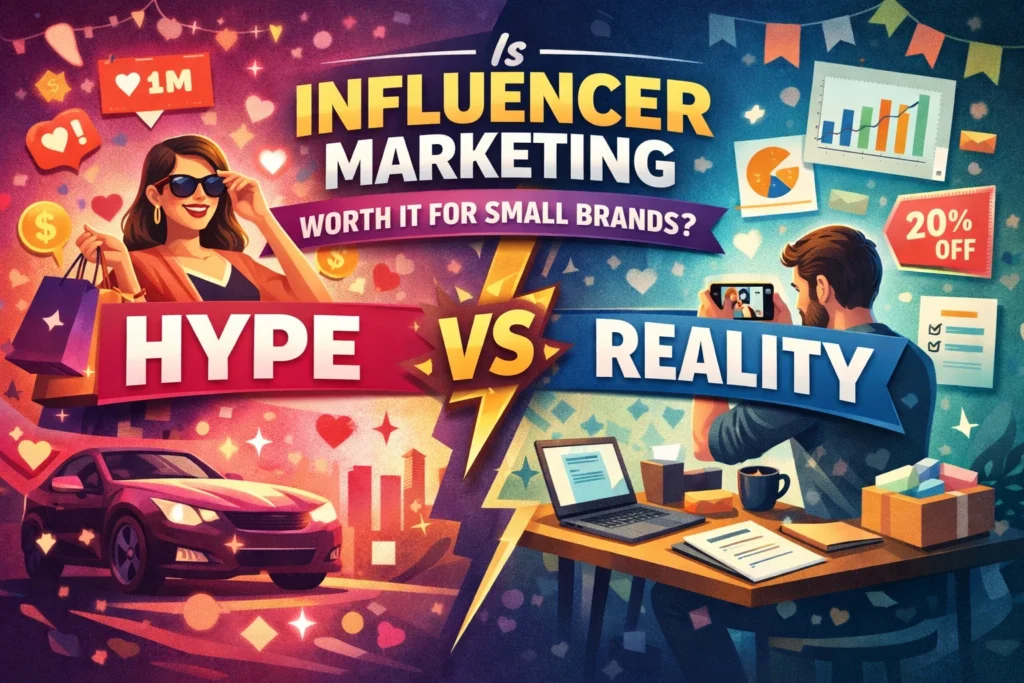
Is influencer marketing actually worth it for small brands, or is it mostly hype created by agencies and social media platforms?
The truth is somewhere in between.
Influencer marketing can be extremely powerful when done correctly. However, when executed poorly, it can easily waste a small brand’s limited marketing budget.
In this article, we’ll break down the real value of influencer marketing for small businesses, the situations where it works best, and how brands can use it effectively without overspending.
Understanding Influencer Marketing
Influencer marketing is a type of marketing where brands collaborate with individuals who have an established audience on social media platforms like:
- YouTube
- TikTok
- Twitter (X)
- Blogs and newsletters
These individuals, known as influencers or creators, promote products or services to their followers through content such as posts, reviews, tutorials, or recommendations.
The reason this strategy works is simple:
People trust people more than advertisements.
When an influencer recommends a product, it feels more like a personal suggestion rather than a traditional advertisement.
Why Influencer Marketing Became So Popular
Several factors have contributed to the rapid rise of influencer marketing.
1. Declining Trust in Traditional Ads
Consumers today are exposed to thousands of ads every day. Because of this, people have become very good at ignoring them.
Influencer content feels more authentic because it comes from someone the audience already follows and trusts.
2. Social Media Consumption Is Higher Than Ever
Platforms like Instagram, YouTube, and TikTok dominate daily screen time.
People spend hours consuming creator content, making influencers one of the most powerful channels for product discovery.
3. Niche Communities Are Strong
Unlike traditional celebrities, many influencers focus on specific niches such as:
- Fitness
- Technology
- Finance
- Parenting
- Gaming
- Travel
- Food
This allows brands to reach highly targeted audiences instead of broadcasting generic ads.
Is Influencer Marketing Worth It for Small Brands?
The short answer is:
Yes — but only if it’s done strategically.
For small businesses, influencer marketing can deliver excellent results because it provides access to audiences that might otherwise be difficult to reach.
However, it works best under certain conditions.
When Influencer Marketing Works Very Well
1. When Brands Work With Micro Influencers
Many small brands believe they need to collaborate with influencers who have millions of followers.
In reality, micro influencers often deliver better results.
Micro influencers typically have:
- 5,000 to 100,000 followers
- Highly engaged communities
- Strong trust with their audience
Because their followers see them as relatable, their recommendations feel more genuine.
For small brands with limited budgets, micro influencers provide better ROI and lower collaboration costs.
2. When Products Are Visually Appealing
Products that can be demonstrated visually perform well in influencer campaigns.
Examples include:
- Fitness products
- Beauty and skincare
- Fashion
- Gadgets
- Food and beverages
- Home decor
Platforms like Instagram and TikTok are ideal for these types of products.
3. When Content Feels Authentic
One of the biggest mistakes brands make is forcing influencers to sound like advertisements.
Audiences can instantly detect sponsored content that feels unnatural.
The best influencer campaigns allow creators to present the product in their own style and voice.
Authenticity is what drives engagement and conversions.
When Influencer Marketing Does NOT Work
Despite the hype, influencer marketing is not a magic solution.
It can fail when brands make common mistakes.
1. Choosing Influencers Based Only on Follower Count
Follower count does not equal influence.
Many influencers have large audiences but low engagement.
Brands should always evaluate:
- Engagement rate
- Audience quality
- Content relevance
- Audience demographics
Sometimes an influencer with 10k followers can outperform one with 500k followers.
2. Ignoring Audience Relevance
If the influencer’s audience is not aligned with the product, the campaign will fail regardless of how popular the creator is.
For example:
A fitness supplement brand partnering with a gaming influencer may not deliver strong results.
Audience relevance matters far more than reach.
3. Expecting Instant Sales
Influencer marketing is often more effective for brand awareness and trust building than direct sales.
Many small brands expect immediate revenue after one collaboration, which rarely happens.
Successful brands treat influencer marketing as a long-term strategy rather than a one-time campaign.
Real Benefits of Influencer Marketing for Small Businesses
When done correctly, influencer marketing can provide several advantages.
1. Faster Brand Awareness
Building brand recognition through SEO and organic marketing can take months or even years.
Influencers can introduce your brand to thousands of potential customers within a single post or video.
2. Social Proof
When people see trusted creators using a product, it builds credibility.
This phenomenon is known as social proof.
Consumers often feel more confident purchasing products recommended by influencers they follow.
3. High Quality Content Creation
Influencers are also content creators.
Instead of spending money on professional photoshoots, brands can receive:
- Product photos
- Lifestyle images
- Video reviews
- Tutorials
- Testimonials
This content can be reused across marketing channels.
4. Improved Conversion Rates
When the audience trusts the influencer, product recommendations often convert better than traditional advertisements.
People tend to believe real experiences more than brand messaging.
The Cost of Influencer Marketing for Small Brands
Influencer marketing costs vary widely depending on several factors:
- Follower count
- Engagement rate
- Platform
- Content type
- Campaign duration
Here’s a rough estimate.
| Influencer Type | Followers | Typical Cost |
|---|---|---|
| Nano Influencer | 1K – 10K | Free product or ₹2,000 – ₹10,000 |
| Micro Influencer | 10K – 100K | ₹10,000 – ₹1,00,000 |
| Macro Influencer | 100K – 1M | ₹1,00,000 – ₹10,00,000 |
For most small businesses, nano and micro influencers provide the best balance between cost and results.
How Small Brands Can Use Influencer Marketing Effectively
Instead of randomly contacting influencers, small brands should follow a structured approach.
Focus on Long-Term Collaborations
One-time posts rarely create a strong impact.
Repeated exposure builds familiarity and trust.
Brands should aim to build long-term partnerships with creators.
Prioritize Engagement Over Followers
Before choosing an influencer, analyze:
- Likes
- Comments
- Shares
- Audience interaction
A highly engaged audience is far more valuable than a large but passive one.
Encourage Honest Reviews
Consumers value transparency.
Instead of scripted promotions, brands should encourage honest feedback and real experiences.
Authentic reviews build credibility.
Track Campaign Performance
Small brands should track metrics such as:
- Website traffic
- Coupon code usage
- Engagement rates
- Conversion rates
Tracking helps determine whether influencer marketing is delivering a positive return on investment.
How Influencer Marketing Agencies Help Small Brands
Managing influencer collaborations can be time-consuming.
Brands need to:
- Find relevant creators
- Negotiate partnerships
- Track campaign performance
- Manage content approvals
This is where influencer marketing agencies can help.
Agencies specialize in connecting brands with the right influencers and managing campaigns professionally.
Companies like Soocel Digital Solutions work with businesses to design influencer campaigns that focus on audience relevance, engagement, and measurable ROI rather than vanity metrics like follower counts.
For small brands entering influencer marketing for the first time, expert guidance can prevent costly mistakes.
So Is Influencer Marketing Mostly Hype?
Influencer marketing is not just hype.
However, it is also not a guaranteed success strategy.
Its effectiveness depends on several factors:
- Choosing the right influencers
- Authentic content
- Audience alignment
- Campaign strategy
- Long-term collaborations
When these elements come together, influencer marketing can be one of the most powerful growth channels for small brands.
But when brands chase large follower counts without strategy, it often becomes an expensive experiment with little return.
Final Thoughts
Influencer marketing can absolutely be worth it for small brands, but success requires a thoughtful and strategic approach.
Rather than focusing on celebrity influencers or viral campaigns, small businesses should prioritize:
- Micro and nano influencers
- Authentic content
- Audience relevance
- Long-term partnerships
With the right strategy, influencer marketing can help small brands build trust, reach new audiences, and grow faster in competitive markets.
FAQs
Is influencer marketing good for startups?
Yes, influencer marketing can be very effective for startups because it helps generate brand awareness quickly and builds trust with targeted audiences.
What type of influencers work best for small brands?
Micro influencers and nano influencers often provide the best ROI for small brands because they have highly engaged audiences and lower collaboration costs.
How much should small brands spend on influencer marketing?
Many small businesses start with campaigns between ₹10,000 and ₹1,00,000 depending on the influencer size and campaign scope.
Can influencer marketing work without a big budget?
Yes. Many small brands collaborate with nano influencers or offer product exchanges instead of large payments.