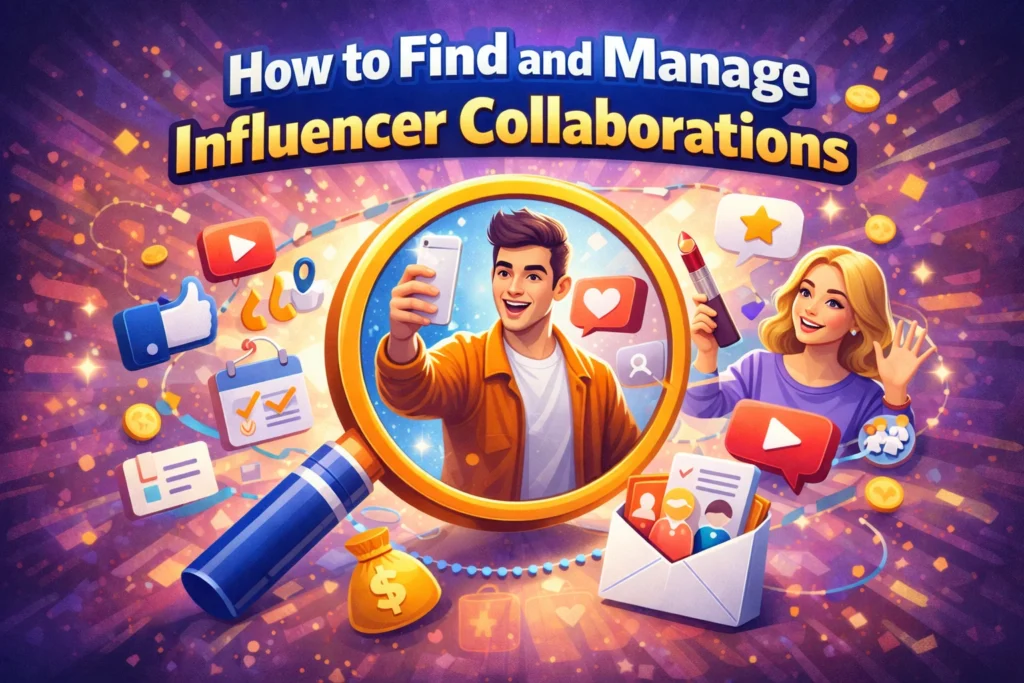
Influencer marketing has gone from a nice-to-have to a genuine growth channel for brands of all sizes. But here is the thing most marketing guides skip: finding the right influencer is only half the battle. Managing that relationship well is where campaigns actually win or fall apart. This guide walks you through both sides of the process, from discovery to execution.
Why Influencer Collaborations Work
People trust people. That is the simple truth behind why influencer marketing continues to outperform traditional ads in engagement and conversion. When someone whose content you follow recommends a product or service, it carries weight that a banner ad never could.
But that trust is fragile. One bad match between a brand and an influencer and the whole thing looks forced. The key is finding collaborators whose audience, values, and content style genuinely align with what you offer.
Step 1: Define Your Goals Before You Search
Before you open Instagram or any influencer platform, get clear on what you actually want from the collaboration. Are you trying to build brand awareness? Drive traffic to a landing page? Generate user-created content you can repurpose? Increase sales of a specific product?
Your goal shapes everything: the type of influencer you need, the platform you focus on, the content format you ask for, and how you measure success. Jumping into influencer outreach without this clarity leads to vague briefs, misaligned expectations, and disappointing results.
Step 2: Know Which Type of Influencer You Need
Not all influencers are built the same, and bigger is not always better. Here is a quick breakdown of the tiers:
Nano influencers (1K to 10K followers) tend to have the highest engagement rates and deeply loyal communities. They are ideal for hyper-targeted campaigns and often work for product gifting rather than large fees.
Micro influencers (10K to 100K followers) offer a strong balance of reach and authenticity. They are often specialists in a niche, whether that is sustainable fashion, home cooking, personal finance, or fitness. Their audiences trust their recommendations because they feel like peers, not celebrities.
Macro influencers (100K to 1M followers) bring significant reach and professional content creation. They are better suited for awareness-stage campaigns and come with higher price tags.
Mega influencers and celebrities (1M+ followers) make sense for large-scale brand campaigns but often show lower engagement rates relative to their follower count.
For most brands, especially those starting out, micro and nano influencers deliver the best return on investment.
Step 3: Finding the Right Influencers
There are several ways to discover influencers who are a genuine fit for your brand.
Search natively on social platforms. Start with hashtags and keywords relevant to your niche. Look at who is already creating content in your space and who is engaging with that content. If someone is already talking about topics adjacent to your brand without being paid to do so, that is a strong signal of natural alignment.
Use influencer discovery tools. Platforms like Soocel, Upfluence, Heepsy, and Modash let you filter by niche, follower count, engagement rate, audience demographics, and location. These tools save enormous amounts of time and give you data points that are impossible to gather manually at scale.
Check your own followers. Some of your best potential collaborators might already be in your community. A micro influencer who genuinely loves your product is a far better partner than someone who has never heard of you and is just in it for the fee.
Look at who your competitors are working with. This is not about copying, it is about understanding the influencer landscape in your category. If an influencer has worked with similar brands, their audience is likely relevant to you too.
When evaluating any influencer, look beyond follower count. Check their average engagement rate, the quality of comments on their posts (real conversation versus generic emoji replies), their posting consistency, and how they interact with their community. Fake followers and bought engagement are still widespread, so use tools that flag suspicious activity.
Step 4: Making Contact the Right Way
Your first outreach message matters more than most people realize. Influencers, especially those in the micro tier, receive a lot of generic copy-paste DMs. A message that clearly shows you have actually engaged with their content will immediately stand out.
Keep your first message short and genuine. Mention a specific piece of their content you appreciated, explain who you are in one or two sentences, and outline the collaboration idea briefly. Do not send a wall of text with brand guidelines and deliverable lists in the first message. That comes later.
Give them a reason to respond. Be upfront about compensation, whether that is a flat fee, commission, product gifting, or a combination. Influencers are professionals and they appreciate brands that treat them as such from the very first touchpoint.
Step 5: Setting Clear Expectations
Once an influencer is interested, the brief becomes your most important document. A good brief covers the campaign goal, key messages you want communicated, any mandatory inclusions (like a discount code or a specific link), what they should avoid saying, the content format and platform, the posting timeline, and how performance will be tracked.
The brief should inform and guide, not script and control. The best influencer content sounds like the influencer, not like a press release. Give them creative freedom within defined guardrails and the results will almost always be better.
Agree on a revision process upfront. How many rounds of feedback are included? What is the approval deadline? How far in advance do they need to submit content for review? Nailing these logistics prevents last-minute stress on both sides.
Step 6: Managing Ongoing Relationships
The brands that consistently win at influencer marketing are the ones that treat collaborations as long-term partnerships rather than one-off transactions. A single sponsored post rarely moves the needle significantly. Repeated mentions from the same trusted voice build the kind of familiarity that drives real purchasing behavior.
After a campaign, follow up with genuine feedback. Share the results with the influencer. Thank them for the work. If it performed well, talk about future opportunities. If something did not land the way you hoped, have an honest conversation about what you would both do differently.
Building a roster of three to ten reliable influencer partners who genuinely like your brand is far more valuable than running one-off campaigns with a rotating cast of strangers.
Step 7: Measuring What Matters
Track the metrics that align with your original goal. If the campaign was about awareness, look at reach, impressions, and new follower growth. If it was about conversions, track clicks, discount code usage, and sales attributed to the campaign. If it was about content creation, evaluate the quality and reusability of what was produced.
Over time, you will build a clear picture of which influencer profiles, platforms, and content formats drive the best results for your brand specifically. That data becomes your competitive advantage.
Final Thoughts
Influencer collaboration is part science, part relationship management. The brands that treat it purely as a media buy miss the human element that makes it work. The ones that invest in finding authentic partners, briefing them well, and nurturing the relationship over time are the ones that see compounding returns.
Start small, be strategic, and build from genuine alignment. The right influencer partnership does not just drive clicks. It builds lasting trust between your brand and a community that was already looking for something exactly like what you offer.