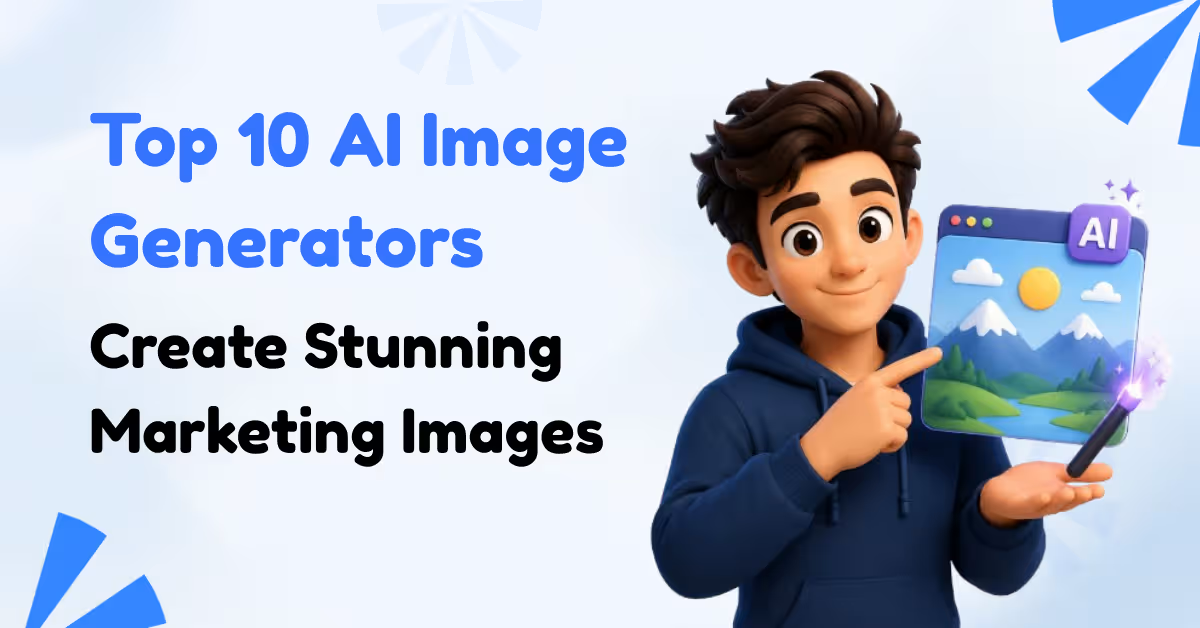
Marketing has always been about capturing attention. Whether you are running paid ads, publishing blog articles, sending email campaigns, or posting on social media, the first thing people notice is the visual. A compelling image can stop someone from scrolling, encourage them to click, and make your brand more memorable.
For years, marketers relied on stock photos, freelance designers, or in-house creative teams to produce marketing visuals. While those methods still have their place, artificial intelligence has introduced a much faster way to create high-quality graphics. AI image generators can transform a simple text prompt into unique visuals within seconds, making them valuable tools for businesses of every size.
The technology has also matured significantly. Early AI-generated images often looked unrealistic or contained obvious flaws. Today’s leading platforms produce photorealistic product shots, professional illustrations, social media graphics, advertising creatives, and branded artwork that can be used across multiple marketing channels.
However, not every AI image generator serves the same purpose. Some focus on artistic creativity, while others prioritize commercial use, branding, or social media content. Choosing the right platform depends on your workflow, budget, and marketing goals.
In this guide, we compare the top 10 AI image generators for marketers in 2026. Each tool has been evaluated based on image quality, ease of use, pricing, commercial licensing, customization options, and overall value for marketing professionals.
Quick Comparison
| AI Tool | Best For | Free Version | Commercial Use | Ease of Use |
|---|---|---|---|---|
| ChatGPT Images | Marketing creatives | Yes | Yes | ★★★★★ |
| Midjourney | Premium artwork | No | Yes | ★★★★☆ |
| Adobe Firefly | Professional branding | Yes | Yes | ★★★★★ |
| Ideogram | Images with text | Yes | Yes | ★★★★★ |
| Canva AI | Social media graphics | Yes | Yes | ★★★★★ |
| Leonardo AI | Product marketing | Yes | Yes | ★★★★☆ |
| FLUX | Photorealistic images | Limited | Yes | ★★★★☆ |
| Stable Diffusion | Full customization | Yes | Depends | ★★★☆☆ |
| Recraft | Logos and brand assets | Yes | Yes | ★★★★★ |
| Microsoft Designer | Quick marketing visuals | Yes | Yes | ★★★★★ |
1. ChatGPT Images
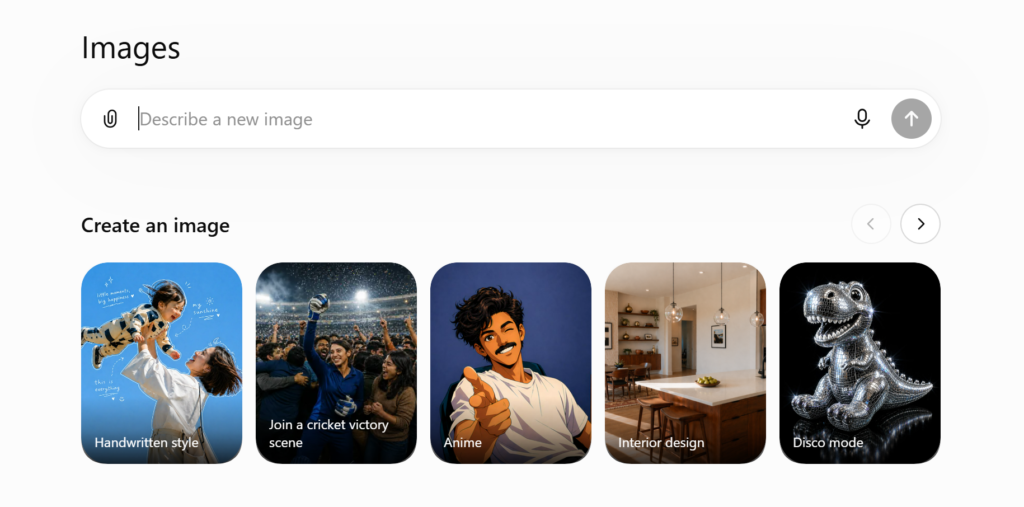
ChatGPT has evolved into much more than a conversational AI assistant. Its image generation capabilities have become one of the most useful tools for marketers who need custom visuals without spending hours designing them. Instead of switching between multiple applications, users can brainstorm ideas, write marketing copy, and generate matching images within the same workflow.
One of the biggest strengths of ChatGPT Images is its conversational editing process. If the first image does not match your expectations, you simply tell ChatGPT what should change. You might ask it to use brighter colors, remove unnecessary objects, change the camera angle, replace the background, or make the design look more premium. This iterative workflow feels much more natural than constantly rewriting prompts from scratch.
For content marketers, this saves a significant amount of time. Blog featured images, email banners, LinkedIn graphics, Facebook advertisements, landing page illustrations, and promotional visuals can all be generated quickly while maintaining consistency across campaigns.
Another advantage is prompt assistance. Many marketers struggle to write detailed AI prompts. ChatGPT helps by improving vague instructions into detailed image descriptions that produce much better results.
The image quality has also improved considerably over the past year. Marketing visuals now feature better composition, realistic lighting, readable layouts, and greater consistency between generations.
Best For
- Blog featured images
- Social media campaigns
- Product mockups
- Digital advertisements
- Marketing concepts
- Content marketing
Pros
- Excellent image quality
- Conversational editing
- Easy for beginners
- Fast workflow
- Strong prompt assistance
Cons
- Some advanced features require a paid subscription.
Pricing: Free plan available. Premium features are included with paid ChatGPT plans.
Overall Rating: 9.8/10
2. Midjourney
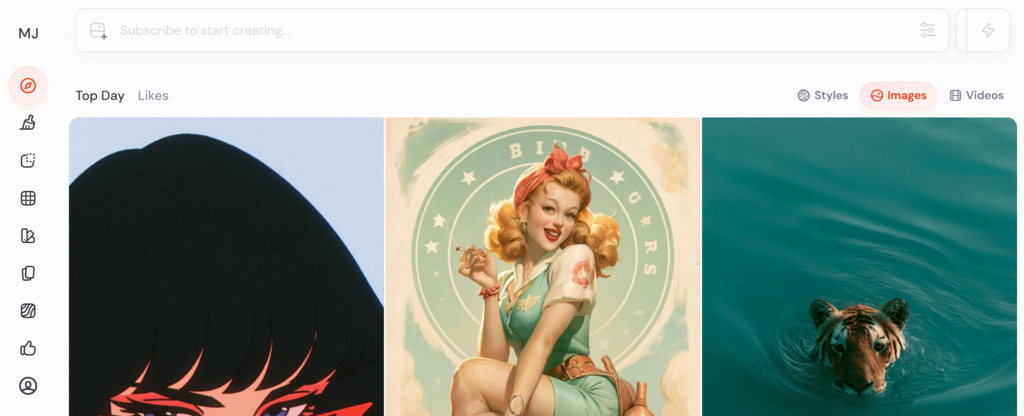
Midjourney has built a strong reputation for producing some of the most visually impressive AI-generated artwork available today. Many creative agencies, advertising teams, and marketing professionals rely on it when they need images that look distinctive rather than generic.
Unlike many AI tools that focus primarily on realism, Midjourney excels at creating visuals with cinematic lighting, dramatic compositions, and artistic depth. This makes it particularly valuable for branding campaigns where visual storytelling is more important than producing simple illustrations.
Luxury brands, fashion companies, travel businesses, and lifestyle marketers frequently use Midjourney to create attention-grabbing campaign assets. The generated images often require little editing before they are ready for publication.
Midjourney also continues to improve its prompt understanding. Users can specify artistic styles, camera lenses, lighting conditions, textures, color palettes, and compositions with remarkable precision. Once you learn its prompting style, the creative possibilities become almost endless.
The biggest limitation is the learning curve. New users may initially find the interface less intuitive than some competitors. However, once mastered, Midjourney consistently produces some of the highest-quality AI visuals available.
Best For
- Brand storytelling
- Luxury advertising
- Fashion campaigns
- Travel marketing
- Creative agencies
Pros
- Outstanding artistic quality
- Excellent lighting
- Premium visual style
- Highly customizable
Cons
- No permanent free plan
- Slight learning curve for beginners
Pricing: Paid subscription required.
Overall Rating: 9.7/10
3. Adobe Firefly
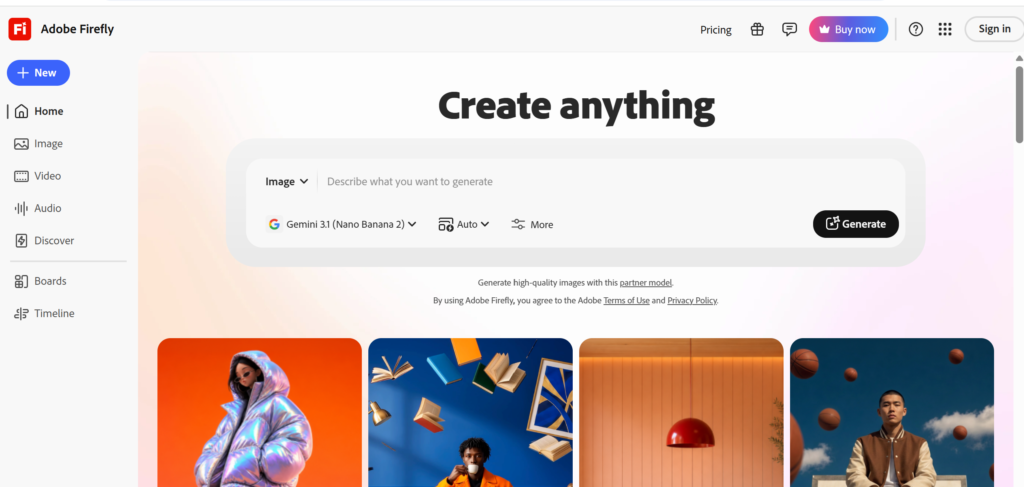
Adobe Firefly has become one of the safest choices for businesses that create commercial marketing content. Developed by Adobe, the platform integrates seamlessly with Photoshop, Illustrator, Adobe Express, and other Creative Cloud applications that many marketing teams already use every day.
One of Firefly’s greatest strengths is commercial confidence. Adobe has invested heavily in training its AI responsibly, giving businesses greater assurance when using generated visuals in advertising campaigns, websites, presentations, brochures, and promotional materials.
For marketers already familiar with Adobe software, Firefly feels like a natural extension rather than an entirely new tool. Images can be generated, refined, expanded, recolored, or edited directly inside Adobe applications, dramatically reducing production time.
Firefly also performs exceptionally well when generating branded assets. Marketing teams can create multiple design variations while maintaining a consistent visual identity across different campaigns.
The platform may not always produce the highly artistic results associated with Midjourney, but it consistently delivers clean, professional visuals suitable for commercial marketing.
Best For
- Corporate branding
- Commercial advertising
- Marketing agencies
- Creative professionals
- Design teams
Pros
- Commercial-friendly licensing
- Excellent Adobe integration
- High-quality results
- Easy editing workflow
Cons
- Works best within the Adobe ecosystem
Pricing: Free credits available with paid Adobe plans for higher usage.
Overall Rating: 9.6/10
4. Ideogram
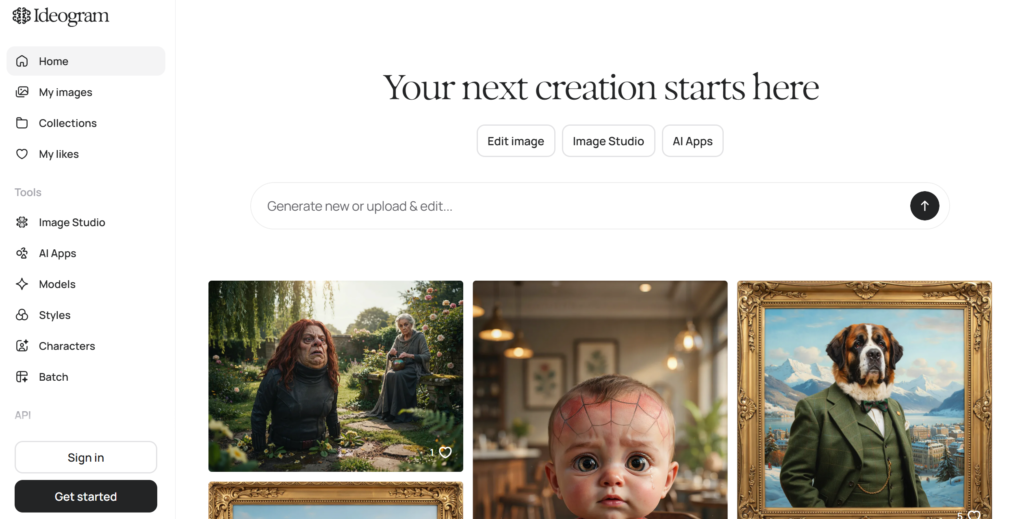
Creating AI images that contain readable text has traditionally been one of the biggest challenges in image generation. Most AI platforms struggle with typography, often producing distorted letters or meaningless words. Ideogram has changed that by focusing specifically on accurate text rendering.
For marketers, this is a significant advantage. Social media posts, event banners, product promotions, YouTube thumbnails, display advertisements, and promotional posters frequently require headlines inside the image itself. Ideogram handles this task far better than many competing platforms.
The interface is straightforward, making it accessible even for beginners. Users simply describe the desired scene while including the exact text they want displayed. The resulting images often require minimal editing before publication.
Ideogram also produces visually appealing compositions beyond typography. Whether you need realistic product photography, colorful illustrations, or modern graphic designs, it delivers impressive consistency.
For businesses producing large amounts of promotional content, Ideogram can eliminate hours of manual design work while maintaining professional quality.
Best For
- Promotional banners
- Posters
- Social media advertisements
- YouTube thumbnails
- Marketing graphics with text
Pros
- Excellent typography
- Beginner-friendly
- High-quality compositions
- Fast image generation
Cons
- Artistic flexibility is slightly lower than Midjourney.
Pricing: Free plan available with premium subscription options.
Overall Rating: 9.5/10
5. Canva AI
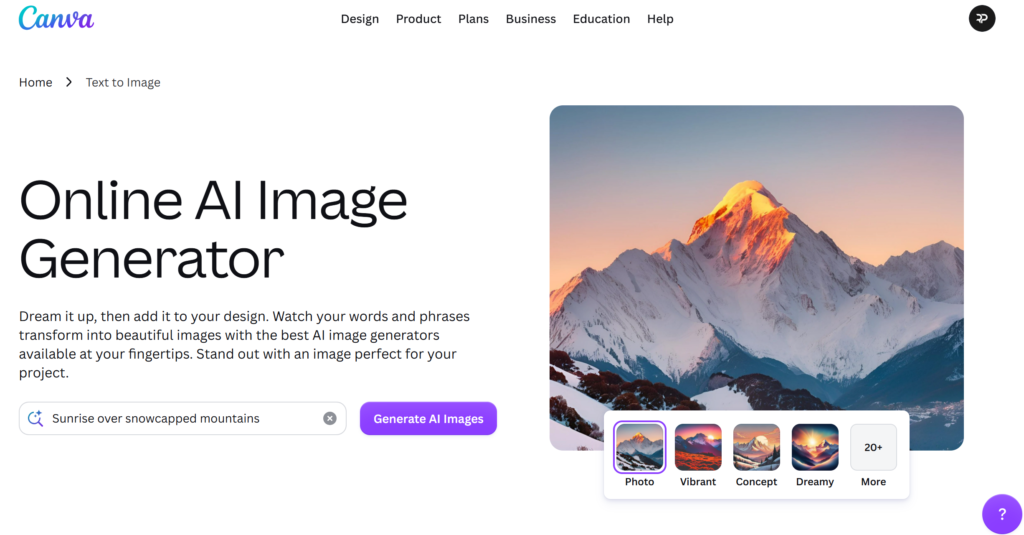
Canva has long been one of the most popular design platforms for marketers, and its AI-powered image generation features have made it even more valuable. Unlike standalone AI image generators, Canva combines image creation with an extensive design ecosystem. Once an image is generated, you can immediately place it inside a social media post, presentation, email banner, infographic, brochure, or advertisement without switching between multiple applications.
This seamless workflow is what makes Canva AI particularly attractive for marketing teams. Instead of downloading images and importing them into another editor, marketers can create an entire campaign within a single platform. Templates for Instagram, Facebook, LinkedIn, Pinterest, YouTube, and Google Display Ads are already available, allowing teams to move from idea to finished creative in minutes.
Canva AI also includes features like Magic Design, background removal, image expansion, AI writing assistance, and automatic resizing. These tools help marketers adapt the same campaign for multiple platforms while maintaining visual consistency.
The generated images may not always reach the artistic level of Midjourney, but they are more than capable of supporting everyday marketing needs. For businesses that publish content regularly, speed often matters more than producing gallery-quality artwork, and Canva delivers exactly that balance.
Its intuitive interface makes it suitable for beginners, freelancers, startups, and even larger marketing departments that need to produce a high volume of content efficiently.
Best For
- Social media marketing
- Blog graphics
- Email campaigns
- Presentations
- Small business marketing
- Content creators
Pros
- Extremely easy to use
- Excellent design templates
- Built-in editing tools
- Great collaboration features
- Supports multiple marketing formats
Cons
- Advanced AI features require Canva Pro.
- Highly customized artwork can sometimes feel less unique than images from specialized AI generators.
Pricing: Free plan available. Canva Pro unlocks additional AI features.
Overall Rating: 9.6/10
6. Leonardo AI
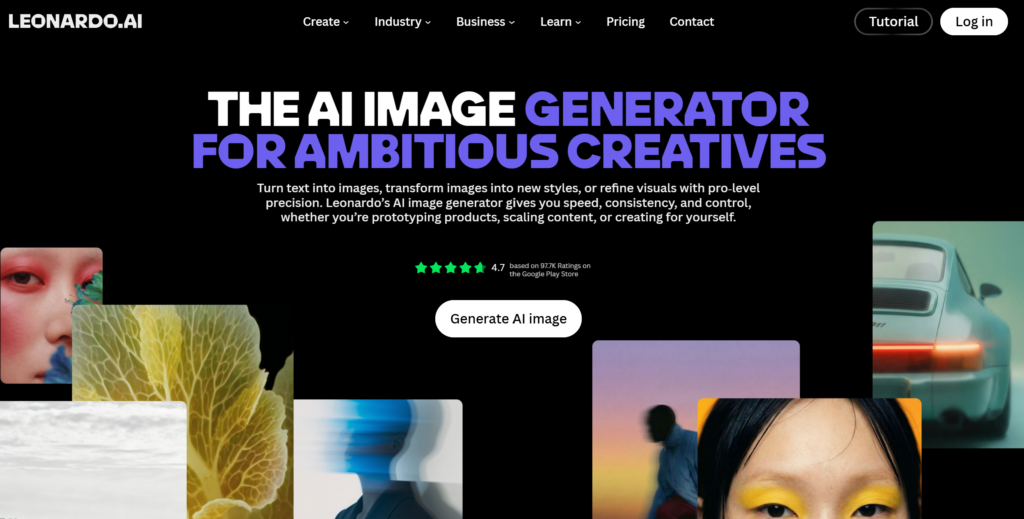
Leonardo AI has quickly become a favorite among marketers who need highly detailed visuals without spending hours refining prompts. Although the platform initially gained popularity in the gaming industry, it has expanded significantly and now serves ecommerce businesses, agencies, startups, and digital marketers around the world.
One of Leonardo AI’s biggest strengths is image consistency. When creating multiple visuals for the same campaign, maintaining a similar style can be difficult with many AI tools. Leonardo AI performs particularly well in generating cohesive collections of images, making it useful for product launches, seasonal promotions, and branded advertising campaigns.
Ecommerce marketers also appreciate its ability to generate realistic product concepts before photography is available. This allows businesses to validate creative ideas, produce mockups, and create promotional assets early in the product development process.
The platform includes several AI models optimized for different styles, giving users more control over realism, illustrations, fantasy artwork, and commercial graphics. Advanced users can also fine-tune settings to match specific creative requirements.
Despite offering advanced controls, Leonardo AI remains relatively approachable for beginners. Most marketers can produce high-quality visuals after only a short learning period.
Best For
- Ecommerce marketing
- Product mockups
- Digital advertising
- Brand campaigns
- Product visualization
- Creative agencies
Pros
- Excellent image consistency
- High-quality outputs
- Multiple AI models
- Strong customization options
- Useful free plan
Cons
- Some advanced settings require experimentation.
- Premium plans are needed for heavy commercial usage.
Pricing: Free plan with daily credits. Paid plans available for higher usage.
Overall Rating: 9.5/10
7. FLUX
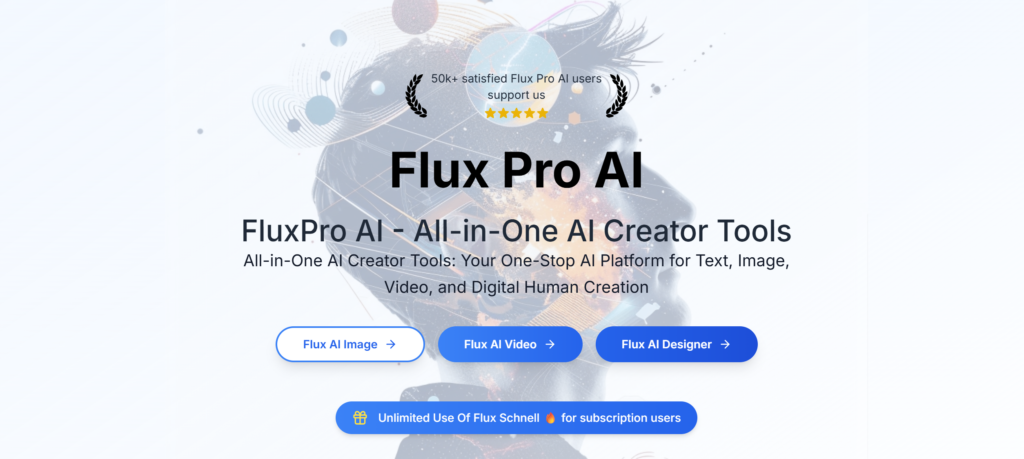
FLUX is one of the newer AI image generators that has attracted significant attention because of its impressive realism. Developed using modern diffusion technology, it produces images that often resemble professional photography rather than digitally generated artwork.
For marketers working in industries such as real estate, hospitality, fashion, interior design, travel, and luxury products, this level of realism can make a substantial difference. Campaigns that rely on authentic-looking visuals tend to perform better because audiences connect more naturally with realistic imagery.
FLUX also demonstrates excellent prompt understanding. It handles detailed descriptions, lighting conditions, camera angles, textures, and facial expressions more accurately than many earlier AI models. This reduces the amount of prompt refinement required before achieving a desirable result.
Another advantage is its natural color rendering. Images generated with FLUX often require very little post-processing before they are ready for use in advertisements or websites.
While the platform continues to evolve, its ecosystem is still smaller than more established competitors. Beginners may also need a little time to understand the different versions and hosting options available.
Even so, marketers looking for highly realistic commercial visuals should keep FLUX near the top of their shortlist.
Best For
- Lifestyle marketing
- Fashion campaigns
- Product advertising
- Hospitality marketing
- Travel promotions
- Premium branding
Pros
- Outstanding realism
- Excellent prompt interpretation
- Natural lighting
- Professional image quality
- Fast generation speed
Cons
- Smaller ecosystem compared to Canva or Adobe.
- Some versions require third-party platforms for access.
Pricing: Availability depends on the platform hosting FLUX.
Overall Rating: 9.4/10
8. Stable Diffusion
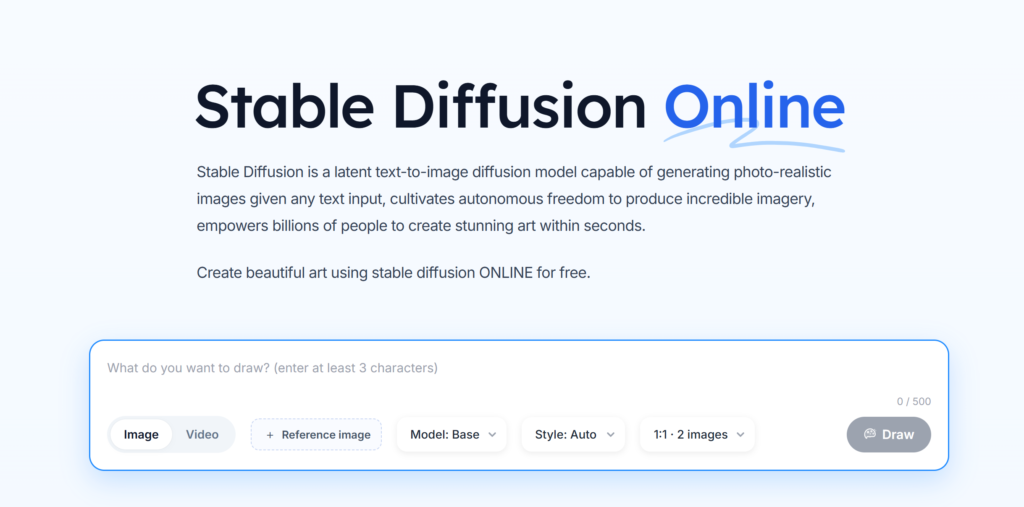
Stable Diffusion remains one of the most flexible AI image generators available today. Unlike many commercial platforms that operate within fixed environments, Stable Diffusion is open source, giving developers, agencies, and technically experienced marketers an exceptional level of control.
This flexibility allows businesses to customize AI models according to their own branding requirements. Organizations can fine-tune models using proprietary datasets, generate consistent visual styles, and even build internal AI-powered design workflows.
For marketing agencies handling multiple clients, this level of customization can become a major competitive advantage. Rather than relying on generic image generation, agencies can create visuals that better align with individual client identities.
Stable Diffusion also benefits from an enormous community of developers who continually release new models, plugins, extensions, and workflows. As a result, the platform evolves rapidly and supports an extensive range of creative possibilities.
However, this flexibility comes with increased complexity. Installing local versions, selecting models, adjusting parameters, and configuring workflows may overwhelm marketers who simply want to generate images quickly.
Businesses seeking ease of use may prefer Canva AI or ChatGPT Images. Those wanting maximum creative control, however, will appreciate everything Stable Diffusion offers.
Best For
- Marketing agencies
- Developers
- Technical users
- Custom AI workflows
- Brand-specific image generation
- Enterprise marketing
Pros
- Open source
- Highly customizable
- Large community support
- Multiple AI models
- No dependency on one provider
Cons
- Steeper learning curve.
- Requires technical knowledge for advanced usage.
Pricing: Free open-source version available. Cloud services may charge separately.
Overall Rating: 9.3/10
9. Recraft
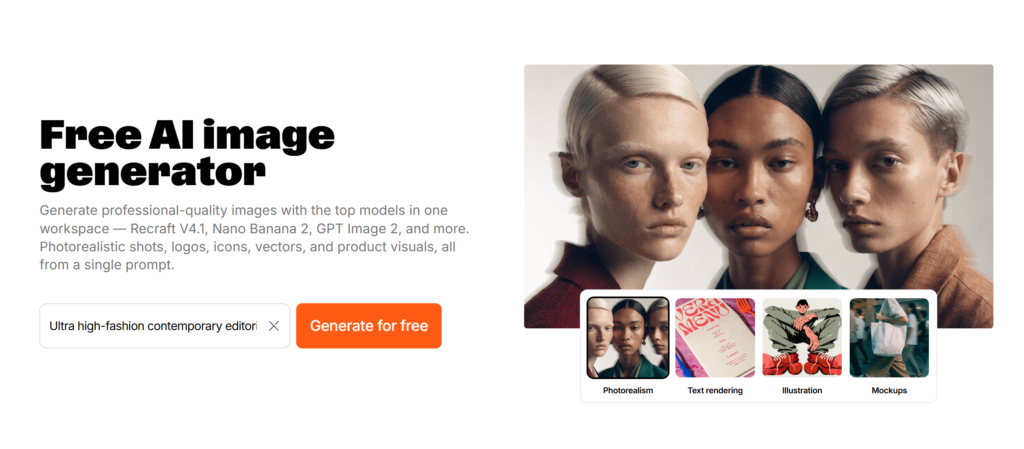
While many AI image generators focus on creating artistic illustrations or photorealistic images, Recraft takes a different approach by helping businesses build consistent visual identities. For marketers, this distinction is important because successful campaigns rely on more than attractive images. They require a recognizable brand that remains consistent across every customer touchpoint.
Recraft specializes in generating vector graphics, icons, logos, illustrations, social media assets, and other branding materials. Unlike raster images, vector graphics can be resized without losing quality, making them ideal for websites, advertisements, business presentations, product packaging, and print materials.
Another area where Recraft performs exceptionally well is maintaining a consistent design style. Marketing teams often need dozens of graphics for a single campaign, and inconsistent visuals can weaken brand recognition. Recraft helps solve this challenge by producing assets that share similar colors, shapes, and artistic styles.
The platform also offers intuitive editing features, allowing marketers to modify individual elements without starting the entire design process again. This flexibility speeds up campaign production and reduces dependency on complex design software.
Although Recraft may not replace advanced illustration tools for professional designers, it provides an excellent balance between simplicity and creative control. Businesses looking to strengthen their branding rather than simply generate standalone images will find considerable value in the platform.
Best For
- Brand identity creation
- Logo concepts
- Marketing illustrations
- Website graphics
- Social media branding
- Vector assets
Pros
- Excellent vector support
- Consistent branding
- Easy editing tools
- High-quality illustrations
- Suitable for commercial projects
Cons
- Less suitable for cinematic artwork.
- Smaller template ecosystem than Canva.
Pricing: Free plan available with premium upgrades.
Overall Rating: 9.3/10
10. Microsoft Designer
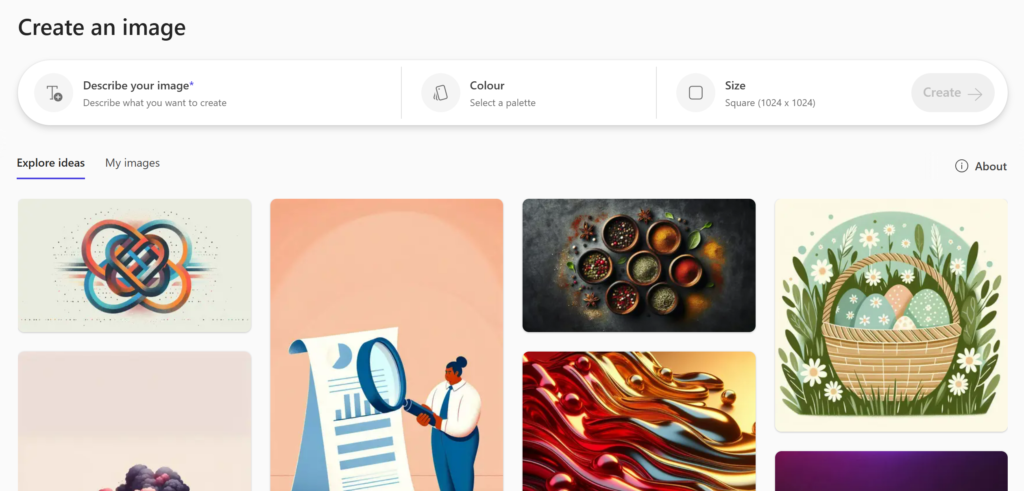
Microsoft Designer is an excellent choice for marketers who want professional-looking marketing assets without investing hours into graphic design. Powered by artificial intelligence and integrated with Microsoft’s ecosystem, the platform combines image generation with ready-made layouts, making it particularly useful for day-to-day marketing activities.
Instead of producing only AI artwork, Microsoft Designer helps users transform those images into complete marketing materials. Whether you are creating Facebook advertisements, LinkedIn posts, Instagram stories, promotional flyers, invitations, newsletters, or display banners, the platform provides templates that significantly reduce production time.
One of its strongest advantages is accessibility. Users who already rely on Microsoft products can incorporate Designer into their existing workflow with minimal learning. The interface is clean, intuitive, and designed for marketers rather than professional designers.
The AI also suggests layouts, typography, and color combinations automatically, allowing even beginners to produce attractive visuals quickly. This makes Microsoft Designer particularly valuable for startups, freelancers, and small businesses that may not have dedicated design teams.
Although it may not offer the creative freedom available in Midjourney or Stable Diffusion, Microsoft Designer excels at helping businesses produce polished marketing content consistently and efficiently.
Best For
- Small businesses
- Marketing teams
- Promotional graphics
- Social media content
- Event marketing
- Quick advertising creatives
Pros
- Beginner friendly
- Excellent templates
- Fast workflow
- Microsoft integration
- Professional marketing layouts
Cons
- Limited advanced customization.
- Better suited for business graphics than artistic projects.
Pricing: Free version available with additional premium features.
Overall Rating: 9.2/10
How to Choose the Right AI Image Generator
With so many capable AI image generators available today, choosing the right one depends less on which platform is objectively “the best” and more on how your marketing team works.
If your business publishes dozens of social media posts every week, speed and convenience should be your priorities. Canva AI and Microsoft Designer excel in these situations because they combine AI-generated visuals with templates that are ready for immediate use.
If your focus is premium branding or high-end advertising campaigns, Midjourney delivers some of the most visually impressive results. Fashion brands, luxury products, travel companies, and creative agencies often prefer its artistic style because it creates memorable visuals that stand apart from typical stock photography.
Businesses already invested in Adobe Creative Cloud will benefit from Adobe Firefly’s seamless integration. Designers can generate, edit, expand, and refine images without leaving familiar Adobe applications, making the creative workflow significantly more efficient.
Content marketers and SEO professionals may find ChatGPT Images particularly valuable because they can brainstorm blog ideas, write content, generate featured images, and refine visuals within one conversation. This unified workflow saves considerable time when producing large amounts of content.
If branding consistency is your highest priority, Recraft deserves attention because of its strength in logos, vector graphics, and brand assets. On the other hand, agencies and technically experienced users looking for maximum customization may prefer Stable Diffusion due to its open-source flexibility.
Before committing to any platform, consider these questions:
- How many images will you create each month?
- Do you need photorealistic images or illustrations?
- Will multiple team members collaborate?
- Is commercial licensing important?
- Do you need built-in editing tools?
- Does the platform fit your existing workflow?
Answering these questions will often narrow your options quickly.
Final Verdict
Every AI image generator featured in this guide has earned its place because it solves a different marketing challenge.
If we compare them purely from a marketer’s perspective, here is how they stand out:
| Requirement | Recommended Tool |
|---|---|
| Overall Best | ChatGPT Images |
| Best Artistic Quality | Midjourney |
| Best for Professional Design Teams | Adobe Firefly |
| Best for Text in Images | Ideogram |
| Best for Social Media Marketing | Canva AI |
| Best for Ecommerce | Leonardo AI |
| Best Photorealism | FLUX |
| Best Customization | Stable Diffusion |
| Best Branding Assets | Recraft |
| Best for Beginners | Microsoft Designer |
Rather than replacing designers, these platforms help marketing teams work faster, experiment with more creative ideas, and produce content at a scale that would have been difficult just a few years ago.
Many businesses now combine multiple AI image generators within the same workflow. For example, they might use ChatGPT Images to brainstorm concepts, Midjourney to create premium campaign visuals, Canva AI for social media publishing, and Adobe Firefly for final editing. Choosing the right combination often delivers better results than relying on a single tool.
Conclusion
Artificial intelligence is no longer a future trend in marketing. It has become an essential part of modern content creation.
The ability to generate high-quality visuals within minutes allows businesses to publish more frequently, experiment with creative campaigns, reduce production costs, and respond to market trends much faster than before.
However, AI image generators are most effective when they support a well-planned marketing strategy. Beautiful visuals alone will not generate leads if they are not backed by strong SEO, persuasive copywriting, optimized landing pages, and effective advertising campaigns.
That is where experienced digital marketers make the difference.
At Soocel Digital Solutions, we help businesses combine AI-powered creativity with proven digital marketing strategies. From SEO and content marketing to Google Ads, Local SEO, website optimization, and performance marketing, our team focuses on turning creative assets into measurable business growth.
If you are investing in AI tools but want to maximize their impact, Soocel.com can help you build a marketing strategy that attracts qualified traffic, increases conversions, and delivers long-term results.
Frequently Asked Questions
Which AI image generator is best for marketers?
The answer depends on your needs. ChatGPT Images is one of the most versatile options for marketers because it combines image generation with prompt refinement. Midjourney is ideal for premium creative campaigns, while Canva AI is excellent for everyday marketing content.
Are AI-generated images safe for commercial use?
Most leading AI image generators allow commercial use, but licensing policies differ between platforms. Before using AI-generated visuals in advertisements or client projects, always review the latest terms of service for the specific tool.
Can AI image generators replace graphic designers?
Not entirely. AI tools accelerate content creation and generate creative ideas quickly, but professional designers still play a critical role in branding, visual identity, complex layouts, and strategic creative direction.
Which AI image generator is best for social media marketing?
Canva AI and Microsoft Designer are among the strongest options because they combine AI image generation with ready-made templates optimized for platforms such as Instagram, Facebook, LinkedIn, Pinterest, and YouTube.
Do AI-generated images help SEO?
Indirectly, yes. Original visuals improve user engagement, increase time spent on a page, and make content more shareable. To maximize SEO value, marketers should optimize image file names, alt text, captions, and loading speed.
What is the best free AI image generator?
ChatGPT Images, Canva AI, Adobe Firefly, Leonardo AI, Ideogram, and Microsoft Designer all offer useful free plans, although premium subscriptions unlock additional features and higher usage limits.
Should marketers use more than one AI image generator?
In many cases, yes. Different tools excel at different tasks. Using one platform for brainstorming, another for artistic visuals, and another for social media design often creates a more efficient marketing workflow.
Which AI image generator is best for small businesses?
Small businesses usually benefit from Canva AI, ChatGPT Images, and Microsoft Designer because these platforms are affordable, beginner-friendly, and capable of producing professional-quality marketing visuals without requiring advanced design skills.