Which Type of Businesses Does Influencer Marketing Work Best For?

Influencer marketing has become one of the most powerful ways for brands to connect with their audience. With the rise of social media, people now trust creators more than traditional ads. But not all businesses may benefit in the same way. So, Let’s explore. 1. Fashion and Beauty Brands Fashion and beauty brands were among […]
Influencer marketing has become one of the most powerful ways for brands to connect with their audience. With the rise of social media, people now trust creators more than traditional ads.

But not all businesses may benefit in the same way. So, Let’s explore.


1. Fashion and Beauty Brands

Fashion and beauty brands were among the first to adopt influencer marketing. And for good reason!

These industries are visual and fast-paced. Influencers help showcase new products through tutorials, reviews, and unboxing videos. Platforms like Instagram, YouTube, and TikTok are perfect for this.

Example: A lipstick brand can send products to beauty influencers, who then create a “Get Ready With Me” video using it. That one video can drive huge traffic and sales.


2. Health and Fitness Businesses

Fitness trainers, wellness coaches, and diet influencers are perfect partners for health brands.

If you sell supplements, workout gear, or offer online fitness programs, influencers can help you build trust quickly. Their audience often looks to them for real advice and product suggestions.

Why it works: The audience already trusts the influencer’s health journey. So, product recommendations feel more personal and authentic.


3. Food and Beverage Companies

From healthy snacks to fancy restaurants, the food and beverage industry thrives on influencer reviews.

Food bloggers and home chefs often share recipes, reviews, and taste tests with their audience. These honest, engaging posts can create instant interest.

Example: A new café can invite local food influencers to try their menu. Their posts will reach a wider audience than any paid ad.


4. Travel and Hospitality Brands

Travel influencers bring destinations to life through storytelling and visuals. Hotels, travel agencies, and airlines can use influencer content to showcase real experiences.

People love to discover new places through the eyes of fellow travelers. Influencers make the experience relatable and inspiring.

Pro tip: Partner with micro-influencers who focus on niche travel like solo travel, adventure travel, or family vacations.


5. Tech and Gadget Startups

Product reviews and “unboxing” videos are a huge hit in the tech space. Influencers who specialize in gadgets and software can make complex tech easier to understand.

Startups can gain early traction by sending products to trusted tech reviewers.

Example: A new smartwatch can reach thousands of potential buyers through a detailed YouTube review.


6. E-commerce and D2C Brands

Direct-to-consumer (D2C) and e-commerce brands thrive on influencer partnerships. Influencers drive traffic directly to product pages through swipe-up links, discount codes, and affiliate links.

These brands often rely on social proof, and influencer content acts as a powerful review system.

Why it works: Influencers help shorten the customer journey—from discovery to purchase.


7. Education and Online Learning Platforms

Influencers in the ed-tech space include tutors, career coaches, and content creators focused on personal growth.

They promote courses, webinars, and study tools to their followers, often with their personal success stories attached.

Example: A career prep platform can partner with a YouTuber who shares productivity hacks or job interview tips.


8. Home Decor and Lifestyle Brands

Lifestyle influencers are experts at creating beautiful content around home decor, DIYs, and furniture setups. These partnerships feel authentic and aspirational.

Pinterest, Instagram, and YouTube are key platforms in this niche.

Pro tip: Collaborate during festivals or seasonal moments like Diwali or Christmas for themed campaigns.


Does Influencer Marketing Work for B2B?

Yes, but differently.

In the B2B space, influencer marketing often includes industry experts, keynote speakers, and niche content creators. These influencers have smaller, focused audiences of decision-makers and professionals.

Example: A SaaS company can partner with a LinkedIn creator who shares growth tips for startups.


Final Thoughts

Influencer marketing works best when it’s authentic and targeted. While fashion and beauty brands may see instant results, other industries like tech, travel, and education can also benefit with the right strategy.

No matter your business type, the key is to:

  • Find the right influencers
  • Set clear goals
  • Track your results

Ready to explore influencer marketing for your business? Now’s the best time to start!

Do you often struggle to measure the performance of your influencer marketing campaign, if yes you are not alone.

Do you often struggle to measure the performance of your influencer marketing campaign, if yes you are not alone. Measuring the success of influencer marketing campaigns involves tracking various metrics to determine the effectiveness of your efforts. The most suitable metrics may vary based on your specific campaign goals, but here are some key indicators […]

Do you often struggle to measure the performance of your influencer marketing campaign, if yes you are not alone.

Measuring the success of influencer marketing campaigns involves tracking various metrics to determine the effectiveness of your efforts. The most suitable metrics may vary based on your specific campaign goals, but here are some key indicators to consider:

– Engagement Metrics:
Likes, Shares, and Comments: These indicate how well your content resonates with the audience and generates conversations.
Engagement Rate: Calculated as (Total Engagements / Follower Count) * 100, this metric helps you compare engagement across different influencers and campaigns.

– Reach and Impressions:
Reach: The total number of unique users who have seen your content.
Impressions: The total number of times your content has been displayed, including multiple views by the same user.

– Follower Growth:
Follower Count: Track the influencer’s follower count before, during, and after the campaign to gauge the impact on their audience.

– Click-through Rate (CTR):
Measure the percentage of users who clicked on a link in your influencer’s content, which can indicate how compelling your call-to-action is.

– Conversion Metrics:
Sales and Conversions: If your campaign aims to drive sales, track the number of conversions or sales attributed to the influencer’s content.
Coupon Codes and Affiliate Links: If applicable, monitor the usage of unique coupon codes or affiliate links the influencer provides.

– Brand Sentiment and Mentions:
Monitor social media and online platforms for mentions of your brand after the campaign to assess whether the sentiment is positive, neutral, or negative.

– Web Traffic and Engagement:
Track the increase in website traffic, time spent on site, and specific pages visited due to the influencer’s promotion.

– User-Generated Content (UGC):
Measure the volume of UGC related to your campaign, showcasing how your audience is engaging with the influencer’s content.
– Influencer Collaboration Satisfaction:
Assess the influencer’s satisfaction with the collaboration and their willingness to work with you again. Positive relationships can lead to more successful future campaigns.

– Return on Investment (ROI):
Calculate the ROI by comparing the campaign’s total costs (influencer fees, content production, etc.) to the generated revenue, conversions, or other valuable outcomes.
– Survey and Feedback:
Collect feedback from your target audience through surveys to gauge their perception of the campaign and brand awareness.
– Long-Term Impact:
Monitor changes in brand awareness, sentiment, and engagement over an extended period to assess the campaign’s lasting impact.

Remember, the choice of metrics should align with your campaign objectives. A combination of these metrics will provide a comprehensive view of the success of your influencer marketing efforts.
#influencermarketing#digitalamarketing#soocel#influencer#linkedininfluencers

When life gives you 15 seconds of fame…make sure you’re using a short video app!

The age of short-form content is here, and it’s here to stay. Whether it’s a quirky dance, a snappy reaction, or a mini product review—15 seconds is all it takes to grab attention. If you’re in the marketing world or just a curious creator, there’s one term you can’t ignore anymore: influencer marketing. It’s fast, […]

The age of short-form content is here, and it’s here to stay. Whether it’s a quirky dance, a snappy reaction, or a mini product review—15 seconds is all it takes to grab attention. If you’re in the marketing world or just a curious creator, there’s one term you can’t ignore anymore: influencer marketing.

It’s fast, it’s effective, and it’s dominating short video platforms like Instagram Reels, YouTube Shorts, and TikTok. Brands are leaning into it, creators are building careers with it, and consumers are buying because of it.

Let’s dive into how those 15 seconds are shaping the future of influencer marketing.


The Rise of Short Video Apps

These platforms reward creativity over polish. You don’t need a big budget, just a clever idea and a phone. This shift has democratized content creation—and in turn, influencer marketing.


Why Influencer Marketing Loves Short-Form Videos

In a world overloaded with ads, short-form influencer content feels like a recommendation from a friend. And that’s the secret sauce of influencer marketing: trust.

Influencer marketing thrives on relatability. When a creator shows how they use a skincare product in a 15-second morning routine, the audience listens—and often buys.

For brands, this is a game-changer. Instead of spending lakhs on polished ads, they can collaborate with 10 micro-influencers and generate better ROI. That’s the beauty of influencer marketing in the short-form era.


How 15 Seconds Can Drive Sales

Short videos tap into impulse. A trendy song, a catchy hook, and a smiling face holding a product—it’s a powerful sales funnel packed into 15 seconds.

Many brands now rely solely on short-form for product launches. Because the content spreads fast and wide, especially when creators use trending audio or hashtags.

Even better? These videos are often repurposed into ads, reels, and stories—giving more bang for every marketing buck.


Influencer Marketing Is Not Just for Big Brands

Thanks to short-form content, even local businesses are jumping on the influencer marketing bandwagon. Whether it’s a new café or a handmade jewelry brand, they’re partnering with nano and micro-influencers to get noticed.

Creators with just 5,000 followers can drive engagement and conversions—because their communities trust them. That’s the heart of effective influencer marketing.


What Makes a Great 15-Second Influencer Video?

A scroll-stopping opening, a relatable script, and a clear call-to-action. That’s the winning formula.

Here’s a quick checklist:

  • Use trending music.
  • Start with a hook in the first 3 seconds.
  • Show the product in action.
  • Add text overlays for context.
  • End with a CTA (“Buy now,” “Link in bio,” etc.).

Short videos that feel like stories.


Track every click, view, and share.

The beauty of short-form influencer marketing lies in its traceability. You can see exactly which creator’s video drove sales, clicks, or app installs.

Use UTMs, discount codes, or affiliate links to track performance. Look beyond likes—engagement, saves, and comments tell you more about true impact.

And don’t forget to ask creators for content rights—you can use high-performing videos across your own brand channels too.


AI tools now help brands find the perfect influencers, track campaign ROI, and even generate scripts. Meanwhile, creators are mastering fast editing tools to churn out viral content in minutes.

Expect to see more:

  • Brand-creator collabs on reels/shorts
  • “Unboxing” or “first reaction” videos
  • Day-in-the-life videos featuring products
  • Quick challenges or trends tied to a brand


Final Thoughts

Consecutive Sentences:
Fifteen seconds can change everything.
From visibility to virality to sales.

Subheading Distribution: Conclusion

Short video apps have redefined how we create and consume content.

If you’re a brand, it’s time to rethink your strategy. If you’re a creator, this is your moment.

Because when life gives you 15 seconds of fame… you better be on camera.

Is it possible to elevate affiliate marketing with influencers?

Introduction In the fast-paced digital world, brands are always looking for smart ways to drive sales and expand their reach. That’s where affiliate marketing with influencers becomes a game-changer. It’s no longer just about promo codes and links. When combined with the power of influencer marketing, affiliate strategies can create trust, boost conversions, and build […]

Introduction

In the fast-paced digital world, brands are always looking for smart ways to drive sales and expand their reach. That’s where affiliate marketing with influencers becomes a game-changer. It’s no longer just about promo codes and links. When combined with the power of influencer marketing, affiliate strategies can create trust, boost conversions, and build long-term brand loyalty.

But is it truly possible to elevate affiliate marketing with influencers? Short answer—yes. Long answer—read on!


What Is Affiliate Marketing?

Affiliate marketing is a performance-based marketing strategy. In simple terms, brands reward affiliates (like bloggers or influencers) for driving traffic or sales through their unique referral links.

If someone buys a product or signs up for a service through that link, the affiliate earns a commission.

It’s a win-win.

  • Brands get more reach and sales.
  • Influencers get paid for doing what they love—creating content.

How Influencers Fit into the Affiliate Model

Influencers already have an engaged audience that trusts their opinions. When they recommend a product or service, it doesn’t feel like an ad—it feels like a suggestion from a friend.

This is where affiliate marketing with influencers becomes so effective.

Rather than traditional banner ads or pushy sales tactics, influencer-led affiliate marketing blends into content seamlessly—whether it’s a YouTube review, Instagram story, or blog post.


Why Influencer-Led Affiliate Marketing Works So Well

Let’s break down why this hybrid model is so powerful.

1. Built-in Trust

Influencers spend years building trust with their audience. When they share affiliate products, their audience listens—because they believe it’s an honest recommendation.

2. Content Is King

Influencers know how to present a product creatively. Whether through tutorials, reviews, or “day-in-the-life” content, they show your product in real-life scenarios—boosting relatability and purchase intent.

3. Performance-Based Payout

Affiliate programs reduce risk for brands. Instead of paying upfront for vague exposure, brands pay only when real results (clicks, sign-ups, or purchases) happen.


How to Elevate Affiliate Marketing Using Influencers

Now let’s talk strategy. Here’s how to take your affiliate marketing program to the next level using influencers.


1. Choose the Right Influencers

Not every influencer will be right for your product. Focus on:

  • Audience relevance: Does their audience align with your target market?
  • Engagement rate: More than follower count, engagement shows how involved their audience is.
  • Content quality: Is it authentic, consistent, and aligned with your brand tone?

Pro Tip: Micro-influencers (10K–100K followers) often have higher engagement and more loyal followers.


2. Provide Exclusive Affiliate Offers

Give influencers something special to offer—like an exclusive discount or early access. It makes their content feel more rewarding and gives followers an incentive to buy through the link.

Example: “Use my code JULIA20 for 20% off this skincare brand I swear by!”


3. Offer Transparent Tracking Tools

Make it easy for influencers to track their results. Many affiliate platforms (like Impact, ShareASale, or Refersion) offer personalized dashboards.

This empowers influencers to treat your campaign like a business—not just a casual collab.


4. Focus on Long-Term Partnerships

Avoid one-off affiliate posts. Instead, build long-term influencer relationships where they can integrate your brand into their content strategy across platforms.

Think monthly product mentions, tutorial series, or lifestyle integrations. These build stronger brand recall and higher lifetime value.


5. Leverage Multiple Platforms

Don’t limit yourself to just Instagram. Combine:

  • YouTube reviews
  • Blog posts with SEO keywords
  • Pinterest pins
  • TikTok trends
  • Twitter threads

The more touchpoints, the better the results.


6. Use Storytelling, Not Just Promotion

Ask your influencers to go beyond “buy this now.”

Instead, let them tell a story:

  • How the product solved a problem
  • Why it’s better than competitors
  • A “before and after” transformation

These real-life narratives make affiliate links feel more organic and powerful.


7. Incentivize Top Performers

Add bonuses, tiered commissions, or exclusive gifts for top affiliates. This gamifies the process and motivates them to keep promoting your brand.


Examples of Brands Doing It Right

Let’s look at a few real-world brands that have mastered affiliate marketing with influencers.

1. Glossier

This beauty brand empowered micro-influencers with referral codes and turned their customers into affiliates. The content felt like real reviews from best friends—not ads.

2. Skillshare

Skillshare uses YouTubers and Instagram creators to offer free trials with affiliate links. The result? High-quality tutorials + clear CTAs = high conversions.

3. Amazon Associates

Amazon’s affiliate program is one of the largest. Influencers often share “Amazon Favorites” videos, earning commissions for every product linked—even if it’s not the main product promoted.


Common Pitfalls to Avoid

While affiliate marketing with influencers is powerful, it’s not without challenges.

1. Focusing Only on Follower Count

A huge following means nothing if it doesn’t convert. Always check engagement and audience relevance.

2. Not Monitoring Performance

Track every click, sale, and commission. It helps in refining future campaigns and rewarding top influencers.

3. Weak Onboarding

Send a proper affiliate kit—brand guidelines, product info, sample content, and unique links. Don’t assume they’ll figure it out on their own.


Measuring Success: Key Metrics

To know if your influencer affiliate campaign is working, track:

  • Click-through rate (CTR)
  • Conversion rate
  • Revenue generated per influencer
  • Cost per acquisition (CPA)
  • Customer lifetime value (CLTV)

These numbers will help you optimize future campaigns and scale better.


The Future of Affiliate + Influencer Marketing

This combo is only going to get stronger.

With AI tools offering better targeting, deeper analytics, and more automation, brands can scale their influencer affiliate programs like never before.

Expect features like:

  • Dynamic commission structures
  • Personalized affiliate landing pages
  • Real-time performance dashboards
  • AI-powered influencer discovery

Final Thoughts

So—is it possible to elevate affiliate marketing with influencers?

Absolutely. In fact, this hybrid approach might just be the future of online marketing.

With the right influencers, strategy, and tools in place, brands can drive sales, grow reach, and build trust faster than ever.

The key is to treat influencers like partners, not just channels. Empower them, track performance, and think long-term.

Did anyone tell you these things about influencer marketing….

Introduction We’ve all heard that influencer marketing is the next big thing. You’ve seen brands using it, creators promoting products, and platforms flooding with hashtags and promo codes. But what if we told you there’s a lot more to it than just selfies and sponsored posts? the stuff nobody usually talks about, but every marketer […]

Introduction

We’ve all heard that influencer marketing is the next big thing. You’ve seen brands using it, creators promoting products, and platforms flooding with hashtags and promo codes.

But what if we told you there’s a lot more to it than just selfies and sponsored posts?

the stuff nobody usually talks about, but every marketer and business owner should know.


1. Influencer Marketing Is NOT Just for Big Brands

You don’t need to be Nike or Apple to run a successful influencer campaign.

Small businesses and local brands can get great results—sometimes even better—by working with micro-influencers or nano-influencers. These creators have smaller but highly engaged communities.

Their followers trust them like a friend, not a celebrity.

So yes, if you’re a local café, a handmade soap seller, or a fintech startup—influencer marketing works for you too.


2. More Followers Doesn’t Mean More Sales

One of the biggest myths: more followers = more sales.

Wrong.

A creator with 500K followers might have poor engagement or fake followers. Meanwhile, a creator with 10K followers may bring 10x better conversions.

What matters more is:

  • Engagement rate
  • Audience quality
  • Content relevance
  • Trust and authenticity

Brands that chase numbers often burn money. Smart brands check the data behind the profile.


3. Influencer Content Can Outperform Your Ads

Here’s a secret—people don’t trust ads, but they trust people.

Influencer-created content often feels more real, more relatable, and more trustworthy. It performs better in:

  • CTR (Click-through rate)
  • Engagement
  • Conversions

Many brands now reuse influencer content in their paid ads because it drives better ROI.

So if you’re running Facebook or Instagram ads, try testing creator content instead of your studio-made ads.


4. Gifting Doesn’t Work Like It Used To

In the early days, sending free products got influencers talking.

Today, most creators expect clear deliverables and fair compensation. Their platforms are their business.

While gifting still works for smaller creators, expect to invest real budgets when working with professional influencers.

Tip: Always respect the creator’s time and effort. You’re paying for access to an engaged, loyal audience—not just a shout-out.


5. Influencer Marketing Is a Long-Term Game

Want to see real results? Stop thinking short-term.

Many brands make the mistake of running one campaign and expecting magic.

But like all marketing, influencer success compounds over time.

  • Build relationships.
  • Collaborate regularly.
  • Turn creators into brand ambassadors.

That’s how you build recognition, trust, and consistent conversions.


6. Not All Influencers Are on Instagram

Shocking, right?

Instagram isn’t the only playground.

Influencers are everywhere:

  • YouTube (long-form content & tutorials)
  • LinkedIn (great for B2B marketing)
  • Pinterest (ideal for fashion, travel, decor)
  • Twitter/X (for thought leadership and tech)
  • Podcasts (trust-building through audio)

So ask yourself—where does your audience hang out? That’s where your influencer campaign should be.


7. Influencer Marketing Works for B2B Too

Think influencer marketing is just for D2C fashion brands?

Think again.

B2B companies are working with:

  • Industry experts
  • LinkedIn creators
  • Tech YouTubers
  • Newsletter writers

These creators help brands generate trust, awareness, and leads through smart content and niche audiences.

If you’re a SaaS or fintech company, this strategy can dramatically reduce your CAC (Customer Acquisition Cost).


8. ROI Is Trackable—If You Do It Right

People think influencer marketing is hard to measure.

It’s not—if you build a proper system.

Use:

  • UTM links
  • Affiliate tracking
  • Promo codes
  • Landing pages
  • Engagement + reach metrics

Tools like Google Analytics, Shopify, and influencer platforms like Impact, Upfluence, and CreatorIQ make it easy to track clicks, sales, and engagement.

Set KPIs in advance and review results like you would with any other campaign.


9. Creative Freedom Drives Better Results

Brands love controlling every piece of content.

But here’s a truth bomb: creators know their audience better than you do.

Let them speak in their own voice. Give guidelines—but allow freedom.

The most viral influencer posts are the ones that feel real, not rehearsed.

People don’t scroll to see ads. They scroll to see people.


10. Influencer Marketing Boosts SEO

Bet you didn’t expect this one!

When influencers:

  • Mention your brand in blogs
  • Link to your site
  • Create YouTube videos with brand tags

They increase your brand visibility on search engines.

Even Instagram or YouTube mentions lead to brand name searches, improving your brand’s digital footprint.

So influencer marketing indirectly boosts your SEO too.


11. Fake Followers and Bots Are Still a Problem

Yes, the dark side exists.

Some influencers buy followers or likes to seem bigger than they are.

That’s why vetting is crucial. Check for:

  • Sudden spikes in followers
  • Low engagement despite high follower count
  • Spammy or repetitive comments

Tools like HypeAuditor, Modash, and Upfluence help detect fraud.


12. Influencer Marketing Builds Brand Communities

It’s not just about selling products.

Long-term influencer partnerships help brands build:

  • Loyal communities
  • User-generated content
  • Brand advocates

These creators can drive product feedback, referrals, and word-of-mouth, making your marketing engine stronger with time.


Final Thoughts

Influencer marketing is more than just a trend—it’s a shift in how people discover, trust, and buy from brands.

Yes, it takes time, strategy, and testing. But done right, it delivers real results.

Let’s recap:

✅ Not just for big brands
✅ It’s about trust, not just numbers
✅ Works on any platform
✅ Influencers boost SEO, ROI, and content value
✅ It’s trackable, scalable, and very much the future

So next time someone asks, “Does influencer marketing really work?”—you’ll know the answer. And now, you also know the untold truths that make it work smarter.

Here’s a funny observation about Influence-driven storytelling

Introduction Influence-driven storytelling has taken over our screens—and sometimes, our sanity. From product reviews in pajamas to 6AM “Get Ready With Me” skincare rituals, the internet is filled with sponsored content. But if you look a little closer, you’ll notice something hilarious… It’s not just about marketing anymore. It’s accidental comedy, disguised as brand strategy. […]

Introduction

Influence-driven storytelling has taken over our screens—and sometimes, our sanity.

From product reviews in pajamas to 6AM “Get Ready With Me” skincare rituals, the internet is filled with sponsored content. But if you look a little closer, you’ll notice something hilarious…

It’s not just about marketing anymore. It’s accidental comedy, disguised as brand strategy.


When Everyone’s “Woke Up Like This” (But It’s Sponsored)

You’ve seen it:

“Woke up fresh thanks to @BrandName’s organic pillow mist 🌿✨ #ad”

Hold on. Did you really wake up just like that—with perfect lighting, edited captions, and a sponsored product placed casually on the bedside?

No shade (okay, maybe a little). But here’s the funny part of influencer marketing: it’s become so polished, it sometimes loops back into parody.


The Rise of “Relatable” Influencers—With Ring Lights and Editing Teams

Influencers used to feel like friends.

Now? Some of them have:

  • A social media manager
  • A virtual assistant
  • A full-blown home studio
  • And a voice-over team

And still start their video with:

“Hey guys, just casually filming this while I eat cereal…”

Sure, Jan.

It’s part of what makes influencer marketing hilarious: the effort to look effortless.


Every Product is “Life-Changing”

We’ve entered an era where:

  • Shampoo is life-changing.
  • A coffee mug changed someone’s productivity.
  • And don’t even get started on collagen gummies.

It’s funny how Influence-driven storytelling turns every product into a miracle. The enthusiasm is contagious—but also kind of suspicious.

No offense, but if your socks “transformed your mindset,” we need to talk.


The “Unboxing” Olympics

Who knew watching people open boxes could be this addictive?

But the way influencers unbox PR gifts is next level:

  • Background music ✔️
  • Fake surprise face ✔️
  • Product reveal with one finger ✔️
  • Dramatic “thank you so much @brand” moment ✔️

Meanwhile, you’re just sitting there thinking:

“Where do I get free stuff like that?”

Spoiler: you probably have to grow your following to 10K and post three times a day. No pressure.


Influencer Logic 101: “I Wasn’t Paid, But I Love It”

You’ll often hear influencers say:

“This isn’t sponsored, I just really love the brand.”

Cut to three days later, and…surprise! Sponsored post with the same brand.

It’s a fun little dance in influencer marketing—the slow lead-in before the paid post drops. And honestly, we’re here for it.


#AD in Disguise

You know it’s a sponsored post when:

  • The camera quality jumps 10x.
  • There’s a long caption that sounds like a press release.
  • The word “journey” is used four times.

But instead of saying it’s an ad, they go with:

“Partnered with the amazing team at BrandX to bring you this experience!”

Don’t get us wrong—it’s smart. But also hilarious.

We’re not mad. We just appreciate the effort.


Influencer content sometimes gets so bizarre, it’s meme-worthy.

Case in point:

  • Breakup announcement…sponsored by a journaling app.
  • Pregnancy reveal…with a brand collab.
  • Mental health day…powered by a herbal tea partnership.

This isn’t shade. It’s just a reflection of how Influence-driven storytelling has blurred the lines between real life and sponsored life.


Brands Jumping on the Bandwagon

Another funny part?

Brands trying too hard to sound Gen Z.

Examples:

  • “Spill the tea with our new matcha line ☕💅”
  • “Slay your skincare, queen 👑”
  • “POV: you’re moisturized and thriving 🧴✨”

Even Pets Are Influencers Now

Your dog has 400 followers? Cute.

Some dogs now have:

  • Brand deals
  • Their own merch line
  • Dedicated PR teams

We live in a world where dogs get invited to launch events—and honestly, they deserve it.

But it’s still kind of funny when a golden retriever is better at content strategy than your startup.


Influencers Influencing Each Other

Ever noticed how:

  • One influencer posts about a brand
  • Then five others do the same
  • Using the same angle, props, and hashtags?

It’s like influencer inception. Influencers influencing influencers to influence the masses.

And the funniest part? It works.


The “How Did I Get Here?” Scroll Effect

One minute you’re on Instagram to check a friend’s story.

Next thing you know:

  • You’ve watched 3 unboxings
  • Liked 5 reviews of face serums
  • Googled a shampoo you didn’t even know existed
  • And maybe bought something

You’ve been influenced, my friend. And yes, it’s kind of funny how easily it happens.


Final Thoughts

Influence-driven storytelling is smart, powerful, and insanely effective.

But it’s also a little bit funny.

From overly dramatic unboxings to sponsored life updates, the world of influencer content is peak entertainment—even when it’s selling us something.

So next time you scroll past a post with 5 emojis, perfect lighting, and a link in bio, smile.

Because somewhere between the filters and hashtags, marketing became content, content became culture, and culture… became comedy.


Key Takeaways

  • Influence-driven storytelling is both genius and hilarious
  • Authenticity is gold, but performance is part of the package
  • Everyone’s trying to be “relatable” in the least relatable ways
  • Sometimes, laughter is the best engagement metric

An interesting take on traditional vs digital marketing

Ah, the epic battle between traditional marketing and digital marketing – a classic showdown for the ages! Picture this: it’s a duel of the Titans, with the conventional marketer sporting a crisp suit, a briefcase full of flyers, and a megaphone to shout their messages to the world. On the other side, the digital marketer […]

Ah, the epic battle between traditional marketing and digital marketing – a classic showdown for the ages! Picture this: it’s a duel of the Titans, with the conventional marketer sporting a crisp suit, a briefcase full of flyers, and a megaphone to shout their messages to the world.

On the other side, the digital marketer dons a hoodie, wields a smartphone, and commands an army of social media platforms like digital sorcery!

In the traditional marketing corner, we have the ‘Billboard Baron’ – a fearless marketing mogul who believes in the power of massive billboards strategically placed along busy highways. Their motto: “Go big or go home!” They think that if a message isn’t the size of a small skyscraper, it’s simply not worth seeing. “Why settle for subtlety,” they declare, as they prepare to plaster ads everywhere, from bus stops to park benches, leaving no public space untouched.

But wait! In the digital marketing corner, the ‘Social Samurai’ is ready to strike. Armed with witty hashtags, viral videos, and memes that can break the internet, they are determined to capture the elusive and ever-scrolling attention of the digital realm. With a twirl of their smartphone, they unleash the power of targeted ads, reaching audiences based on their interests, age, location, and even their pet’s favorite toy!
As the battle unfolds, the ‘Billboard Baron scoffs at the ‘Social Samurai’, claiming that the digital world lacks a personal touch.

“Who needs engagement and interactivity when you can have a larger-than-life message shouting at you from the heavens?” they proclaim with a smirk.


Meanwhile, the ‘Social Samurai’ retorts, “Ah, but dear Baron, while your billboards might tower above, they lack the power of real-time data and analytics! I can track my campaign’s success, A/B test, and adjust my strategy on the fly! Can your billboards do that?”

In a surprising twist, the ‘Billboard Baron’ takes a moment to ponder and realizes there’s more to marketing than sheer size. Perhaps there is merit in understanding the audience’s behaviors and preferences in real time. And the ‘Social Samurai’ admits that a billboard, when well-designed, can make a striking visual impact.

As the dust settles, they both acknowledge that the key lies in embracing both worlds – merging the strength of traditional marketing’s tangible appeal with digital marketing’s dynamic reach and adaptability. After all, in the realm of marketing, diversity and versatility reign supreme!

So, dear audience, let us remember that the traditional and digital marketing battle is not about one side prevailing over the other. Instead, it’s a dance of collaboration and creativity, where marketers of all kinds join hands (and screens) to craft engaging, entertaining, and ultimately successful campaigns that captivate hearts and minds!

Common Mistakes to avoid when Running an Influencer Marketing Campaign

Influencer marketing can be a powerful way to reach your target audience and promote your brand, but there are several things to avoid to ensure that your campaign is successful. Here are some common mistakes to avoid when running an influencer marketing campaign: Choosing the wrong influencers: It’s important to choose influencers who align with […]

Influencer marketing can be a powerful way to reach your target audience and promote your brand, but there are several things to avoid to ensure that your campaign is successful. Here are some common mistakes to avoid when running an influencer marketing campaign:

Choosing the wrong influencers: It’s important to choose influencers who align with your brand values and have an engaged and relevant audience. Don’t simply choose influencers based on their follower count or popularity without considering whether they are a good fit for your brand.

Lack of transparency: Influencer marketing must be transparent, and you should clearly disclose any paid partnerships. This is not only a legal requirement but also essential to maintain trust with your audience.

Unrealistic expectations: It’s essential to have realistic expectations of what your influencer marketing campaign can achieve. Don’t expect instant success or overnight results. Influencer marketing is a long-term strategy that requires patience and persistence.

Lack of communication: Communication is key when working with influencers. Ensure that you have clear expectations and goals for the campaign and that you provide the influencers with all the necessary information and resources to promote your brand.

Ignoring engagement metrics: Don’t solely focus on follower counts and likes when selecting influencers. Ensure that you analyze engagement metrics such as comments and shares to determine whether an influencer’s audience is genuinely engaged.

Lack of creativity: Influencer marketing campaigns need to be creative to stand out from the competition. Avoid cookie-cutter campaigns and work with influencers to create unique and engaging content that resonates with their audience.

Over-promotion: Avoid bombarding your audience with too many promotional messages. This can quickly lead to audience fatigue and loss of interest in your brand.

By avoiding these common mistakes, you can run a successful influencer marketing campaign with Soocel that helps you achieve your business goals.

Top 10 Indian Finance Influencers on Instagram

In the past 2 years in the time of covid, people have started realizing how important it to is be financially Independent and educated as well and social media has played a vital role in educating people about financial knowledge with the help of these finance influencers on Instagram. Many influencers have gained so much […]

In the past 2 years in the time of covid, people have started realizing how important it to is be financially Independent and educated as well and social media has played a vital role in educating people about financial knowledge with the help of these finance influencers on Instagram. Many influencers have gained so much popularity in the past 2 years. These are some top Indian Finance Influencers in 2022.

1. Sharan Hegde

Instagram Handle – financewithsharan
Followers – 1.8 M

Sharan Hegde is the founder of Finance with Sharan, where through his social media channels he creates content to educate people about finance, money management, and investments. He is 26 years old and a graduate of Rv College of Engineering with a B.Tech Degree in Mechanical Engineering.

2. Neha Nagar
Neha Nagar
Instagram Handle – iamnehanagar
Followers – 1.3M

Neha Nagar is a 28-year-old entrepreneur and finance content creator from Delhi India. She is the CEO of her startup called Taxation Help, a technology-driven service that helps start-ups with legal advice.

3. Ankur Warikoo
Ankur Warikoo
Instagram Handle- ankurwarikoo
Followers – 1.8 M

Ankur Warikoo is an entrepreneur, angel investor, public speaker, and content creator. He is also the founder of an e-commencer website called nearbuy.com.

4.CA Rachna Phadke Ranade
Rachna Ranade
Instagram Handle – ca_rachanaranade
Followers- 816k

Rachana Ranade is a Pune-based Teacher, Enterpernure, Chartered Accountant, and content creator. She has an experience of 10+ years in Financial and legal services.

5.Bekifayati
Bekifayati
Instagram Handle – bekifaayati
Followers – 626k

Manu Bisht is an 30-year-old content creator and Indian actress. She makes financial-related content on social media platforms . she has a unique style of creating content due to which viewers like to watch her content.

6. Sheryaa Kapoor
Shreya Kapoor

Instagram Handle – shreyaakapoor_
Followers – 620k

Shreyaa Kapoor is a well-known content creator in the finance field. Her simple and informative videos give her a huge fan following on Instagram.

7. Anuskha Rathod
Anushka Rathod
Instagram Handle – anushkarathod98
Followers – 572k

Anuskha Rathod is a well-known content creator in the finance field. She has a different style of making videos, which her followers like the most.

8. Unfinance
unfinance
Instagram Handle – unfinance
Followers – 514k

Unfinance is a Group/Community of creators who make videos about finance-related topics. They also have an app called UNFINANCE where they post financial news in 60 words.

9. Profit Tiger
profit tiger
Instagram Handle- profittiger_
Followers – 367k

Pooja Patil is a finance creator. She makes videos in a comedy and informative way.

10. CA Twinkle Jain
CA twinkle jain
Instagram Handle – ca.twinklejain
Followers – 290k

Twinkle Jian is s 26-year-old, Chartered Accountant . She started making finance-related videos in 2021 and now in 2022 she has been among the top finance creators.

If you are interested in working with Top finance influencers on Instagram, visit our website – www.soocel.com.

NFTs on Instagram – All you need to know about latest development.

A group of token creators and collectors will soon have the ability to display their tokens on Instagram. We are excited about the future and look forward to seeing what this feature can do for the Instagram community. Instagram head Adam Mosseri said that a small group of US users will have the ability to […]

A group of token creators and collectors will soon have the ability to display their tokens on Instagram. We are excited about the future and look forward to seeing what this feature can do for the Instagram community.

Instagram head Adam Mosseri said that a small group of US users will have the ability to display NFTs on their feed, stories, and messages. NFT details are displayed in a similar way to tagged profiles and products and are named “digital collectibles.” Clicking on the tag will display details like the name of the creator and owner.

He said “the test is small to start so that Instagram can learn from the community. Perhaps in an attempt to tackle distrust of a major social networking platform jumping into NFTs, he brings up a tension between large companies like Instagram and the decentralized ethos of Web3.”

“I want to acknowledge upfront that NFTs, blockchain technologies, and Web3 broadly are all about distributing trust, distributing power, but Instagram is fundamentally a centralized platform, so there’s a tension there.”

NFTs that are minted on the Ethereum and Polygon blockchains will be supported for now, with Solana and Flow coming soon according to a spokesperson from Meta.

NFTs on Instagram could help introduce the technology to a broader range of people. Instagram isn’t the first platform to do so: in January, Twitter introduced NFTs on the platform. An icon in the corner of Instagram posts of NFTs also appears as a hexagon. Though companies and celebrities have been quick to jump on NFTs, some recent sales have produced temporary activity spikes.

​​For more such content visit our website — www.soocel.com

How to Rank Your Videos on the First Page of YouTube — Part 2 (Optimization while uploading a video)

As I explained in the last blog YouTube SEO is done in two parts. Part-1 is content planning which we have discussed in the last blog. If you haven’t read that blog yet I am giving the link to that blog here, please read that blog. Link –https://www.soocel.com/how-to-rank-your-videos-on-the-first-page-of-youtube-part-1-content-planning/ Now in this blog, we will explain […]

As I explained in the last blog YouTube SEO is done in two parts. Part-1 is content planning which we have discussed in the last blog. If you haven’t read that blog yet I am giving the link to that blog here, please read that blog. Link –https://www.soocel.com/how-to-rank-your-videos-on-the-first-page-of-youtube-part-1-content-planning/

Now in this blog, we will explain the optimization of content while publishing the video to receive the best results for YouTube SEO. One needs to take care of the below-mentioned points to receive the best results.

Video Title

The video title and description should include the keywords that best describe it. When using Google search, the video name is often the first thing that appears in the listing. Including keywords in your title and description can help your video rank higher on search engine results pages (SERPs). Your keyword choices in the title should be driven by the research which has been done while creating the content.

Video Description

In order to get the most views on YouTube, you have to optimize your video descriptions. The description is one of the main factors in determining if someone watches a video or not. People often skim through these descriptions and if it doesn’t interest them they skip over it and move on.

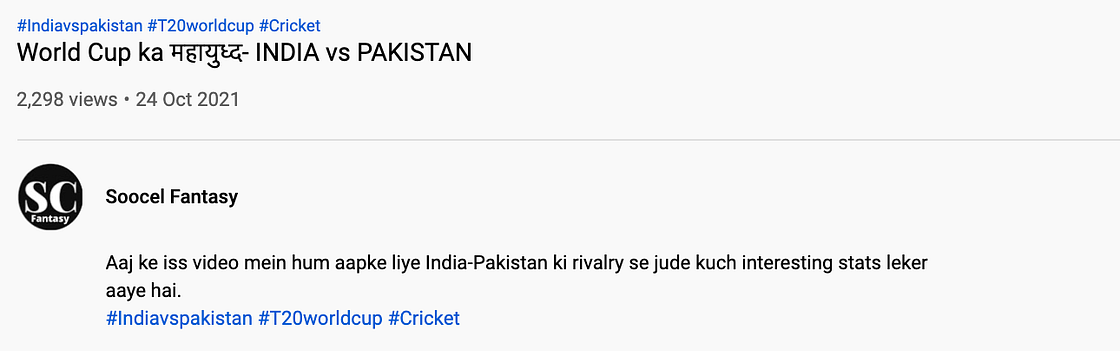
Important Note — YouTube allows you to use 3 hashtags that are seen along with your video. These hashtags also add value for ranking your video for those search terms. So these needed to add to your volume. The most important keywords should be used as hashtags.

In the above-mentioned example, three important keywords have been used as hashtags. Only the first 3 hashtags are shown along with the title.

Video Tags

The question of what tags to use when uploading your video can be a daunting task. There are many tags that you may need to use for your video content, depending on the type of video you are uploading. For example, if you are uploading a how-to video, then tagging it with “how-to” would be appropriate. In the same way, all the important keywords should be used as tags while uploading the video.

Video Thumbnail

Videos are a powerful content marketing tool that can help you reach a wider audience and communicate your message more effectively. They can help you establish authority, build trust, and increase conversions. The thumbnail image is the first thing people see when they come across your video on various social media platforms — it’s important to make it compelling enough to draw them in. Your thumbnail should interesting so it can draw viewers’ attention to click on the video. You are also advised to rename your thumbnail image to the video’s title.

These are the few things that you need to take care of while uploading your videos. If the above-mentioned points are followed along with great content, your channel will grow tremendously.

For more such content visit our website — www.soocel.com

How to Rank Your Videos on the First Page of Youtube — Part 1 (Content Planning)

The YouTube community is one of the largest online. It’s also one of the most competitive. Many people in this community are looking for ways to grow their channels and make more money. YouTube SEO is important because it will help you rank in the search engine results pages (SERPs) for your videos. Optimizing your […]

The YouTube community is one of the largest online. It’s also one of the most competitive. Many people in this community are looking for ways to grow their channels and make more money.

YouTube SEO is important because it will help you rank in the search engine results pages (SERPs) for your videos. Optimizing your videos can help you get more views, which can lead to more subscribers, which can lead to more revenue.

We need to look at YouTube SEO in 2 phases. In this blog, we will discuss the content planning part for Youtube SEO.

Content Planning for Youtube SEO

For big channels, there are a lot of subscribers and they come to the channel to watch the content which is in line with the creators’ niche. So big channels can make the content in line with their previous content and that will rank on youtube because they will get a lot of views from their existing subscribers which will help them rank higher on youtube and bring in more views.

But things are not the same for new channels, they need to be innovative in their content planning to rank their videos on YouTube.

Google Trends is an effective tool that can be used to figure out the topic for your next video. You can find the topics in your niche which are trending in the given time frame and choose your topic accordingly.

Google Keyword Planner can be used in injunction with Google trends to find the related keywords to the trending keywords and create your script accordingly.

There are other keyword planning tools that are available to help you out in this.

SEO-based content planning is very important for small channels as this builds the base for the second phase of Youtube SEO which needs to be done while publishing the video. We will discuss this in our next blog.

For more such content visit our website — www.soocel.com