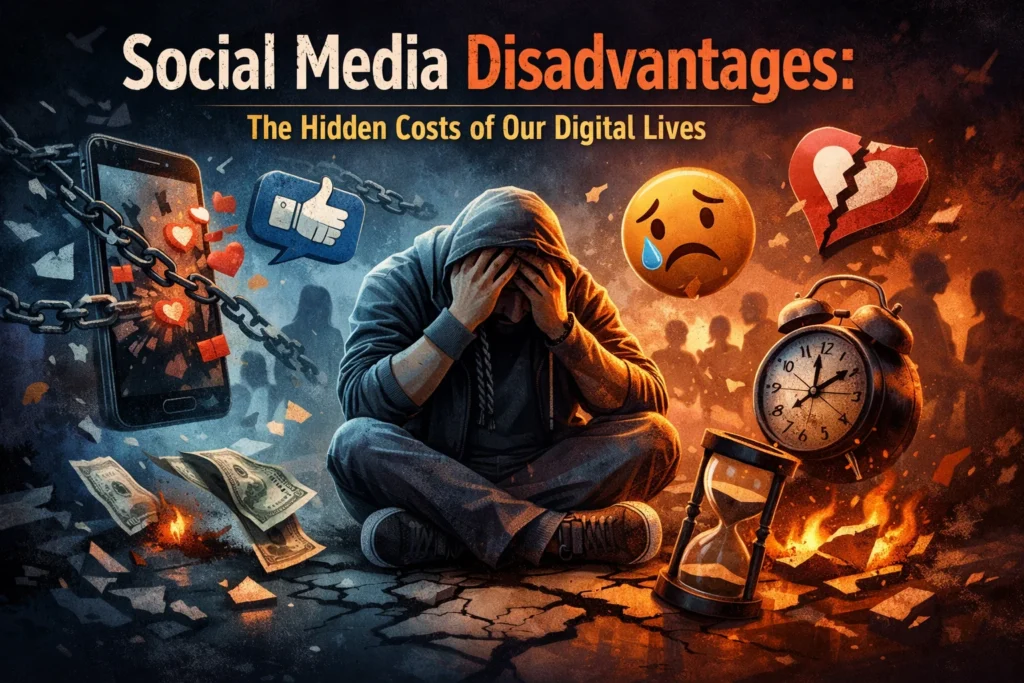
Social media has become a part of everyday life. From scrolling through updates in the morning to checking notifications before sleep, it feels almost impossible to disconnect. Platforms that once promised connection, creativity, and convenience now shape how we think, communicate, and even see ourselves. While there are clear benefits, the growing concern around social media disadvantages cannot be ignored.
This article explores the deeper impact of social media on mental health, productivity, relationships, and society. If you have ever felt drained after scrolling or compared your life to others online, you are not alone. Let’s take a closer look at what is really happening behind the screen.
The Illusion of Connection
At first glance, social media appears to bring people closer. You can stay in touch with friends, connect with strangers across the world, and share your life instantly. However, this connection often lacks depth.
Many conversations on social platforms are surface-level. Likes and comments replace meaningful discussions. Over time, people may begin to feel isolated despite being constantly “connected.” This creates a strange paradox where users are surrounded by digital interaction but lack real emotional bonds.
The problem becomes more visible when people start prioritizing online interactions over face-to-face relationships. A birthday wish on a post may replace a phone call. A quick emoji reaction might take the place of genuine conversation. Slowly, relationships lose their authenticity.
Mental Health Challenges
One of the most serious social media disadvantages is its impact on mental health. Continuous exposure to curated content can distort reality. People tend to share their best moments, achievements, and highlights, rarely showing struggles or failures.
This creates unrealistic standards. Users begin comparing their lives with these filtered versions of reality. It often leads to feelings of inadequacy, low self-esteem, and anxiety.
Over time, this comparison cycle can turn into a habit. A person might scroll endlessly, feeling worse after each session. Studies have shown that excessive social media use is linked to increased levels of stress and depression.
Another issue is validation dependency. Many users begin to measure their worth through likes, shares, and followers. When engagement drops, it can affect mood and confidence. This emotional dependency is subtle but powerful.
You may see this: Top Mental Health Influencers India
Addiction and Time Waste
Social media platforms are designed to keep users engaged. Features like infinite scrolling, notifications, and algorithm-driven content make it hard to stop.
What starts as a five-minute break often turns into hours of scrolling. This leads to a significant loss of time that could have been used for productive activities such as learning, working, or spending time with family.
The addictive nature of social media affects focus as well. Constant switching between apps reduces attention span. People find it harder to concentrate on tasks that require deep thinking.
For students and professionals, this becomes a major issue. Productivity drops, deadlines get delayed, and overall performance suffers. The long-term impact on career growth can be serious.
Sleep Disturbances
Another overlooked disadvantage is the effect of social media on sleep patterns. Many people use their phones late at night, scrolling through feeds or watching videos.
The blue light from screens interferes with the body’s natural sleep cycle. It reduces melatonin production, making it harder to fall asleep. Even when users go to bed, their minds remain active due to continuous content consumption.
Poor sleep leads to fatigue, reduced concentration, and mood swings. Over time, it can affect both physical and mental health.
Cyberbullying and Online Harassment
Social media has given everyone a voice, but not all voices are positive. Cyberbullying has become a major concern, especially among teenagers and young adults.
Unlike traditional bullying, online harassment can happen at any time. Hurtful comments, trolling, and public shaming can have a lasting emotional impact.
Victims often feel helpless because the abuse is visible to a large audience. In severe cases, it can lead to anxiety, depression, and even withdrawal from social life.
The anonymity of the internet makes it easier for people to behave aggressively. Many users say things online that they would never say in real life. This creates a toxic environment that affects everyone.
Privacy Risks and Data Exploitation
When using social media, users often share personal information without fully understanding how it is used. Photos, locations, preferences, and even private messages can be collected and analyzed.
This data is often used for targeted advertising, but it can also be misused. Privacy breaches and data leaks are becoming more common. Once information is online, it is difficult to control where it goes.
Many users are unaware of how much data they are giving away. Simple actions like accepting terms and conditions can grant platforms access to sensitive information.
This raises serious concerns about digital privacy and security.
Impact on Self Image and Body Perception
Social media platforms are filled with edited images and filtered content. Influencers and celebrities often present an ideal version of themselves.
This creates unrealistic beauty standards. Users, especially teenagers, may feel pressured to look a certain way. It can lead to body dissatisfaction and unhealthy habits.
The constant exposure to “perfect” images can damage self-image. People begin to focus on their flaws rather than their strengths.
Over time, this can affect confidence and overall mental well-being.
Spread of Misinformation
Another major disadvantage is the rapid spread of misinformation. Social media allows content to go viral quickly, regardless of its accuracy.
False information can influence opinions, create panic, and even affect important decisions. During critical situations, such as health crises or elections, misinformation can have serious consequences.
Many users do not verify information before sharing it. This contributes to the problem. The line between real and fake content becomes blurred.
As a result, trust in information sources decreases.
Reduced Real World Social Skills
Spending too much time on social media can affect real-world communication skills. People may become more comfortable interacting online than in person.
Face-to-face communication involves body language, tone, and emotional cues. These elements are often missing in digital conversations.
Over time, users may struggle with social interactions. They might feel awkward in real-life situations or avoid them altogether.
This can impact personal relationships, job opportunities, and overall confidence.
Negative Impact on Relationships
Social media can also create problems in personal relationships. Misunderstandings, jealousy, and lack of communication are common issues.
For example, seeing a partner interact with others online can lead to insecurity. Misinterpretation of messages or posts can create unnecessary conflicts.
In some cases, people become more invested in their online lives than their real relationships. This imbalance can lead to emotional distance.
Trust issues may also arise due to constant online visibility.
Decreased Productivity in Daily Life
One of the most practical social media disadvantages is its effect on daily productivity. Constant notifications interrupt work and reduce efficiency.
Even when not actively using social media, the urge to check updates can be distracting. This affects the ability to stay focused.
For professionals, it can lead to missed opportunities and reduced performance. For students, it impacts learning and academic results.
Over time, this habit becomes difficult to break.
Commercialization and Consumer Pressure
Social media platforms are heavily driven by advertising. Users are constantly exposed to products, services, and lifestyle promotions.
This creates a sense of consumer pressure. People may feel the need to buy things they do not actually need.
Influencer marketing plays a big role in this. Followers often trust recommendations without questioning them. This can lead to impulsive spending.
The focus shifts from genuine needs to social validation through material possessions.
Emotional Exhaustion
Continuous exposure to content can lead to emotional fatigue. News updates, personal stories, and trending topics can be overwhelming.
Users are constantly processing information. This can lead to burnout and mental exhaustion.
Taking breaks becomes necessary, but many people find it hard to disconnect. The fear of missing out keeps them engaged.
This cycle affects overall mental balance.
Loss of Authenticity
Social media often encourages people to present a polished version of themselves. Filters, captions, and edits create a curated identity.
Over time, users may lose touch with their real selves. They begin to act based on what gets attention rather than what feels authentic.
This affects self-awareness and personal growth. Living for validation rather than genuine experiences can be limiting.
How to Reduce the Negative Impact
While the disadvantages are real, it is possible to use social media more responsibly. Awareness is the first step.
Setting time limits, taking regular breaks, and being mindful of content consumption can make a difference. Focusing on meaningful interactions instead of passive scrolling can improve the experience.
It is also important to verify information before sharing and protect personal data. Building real-life connections should always remain a priority.
Conclusion
Social media is a powerful tool, but it comes with significant downsides. From mental health issues to productivity loss, the impact is wide and often underestimated.
Understanding these social media disadvantages helps users make better choices. The goal is not to completely avoid social media, but to use it in a balanced and mindful way.
In the end, technology should serve us, not control us. The more aware we are, the better we can protect our time, mental health, and relationships in this digital age.