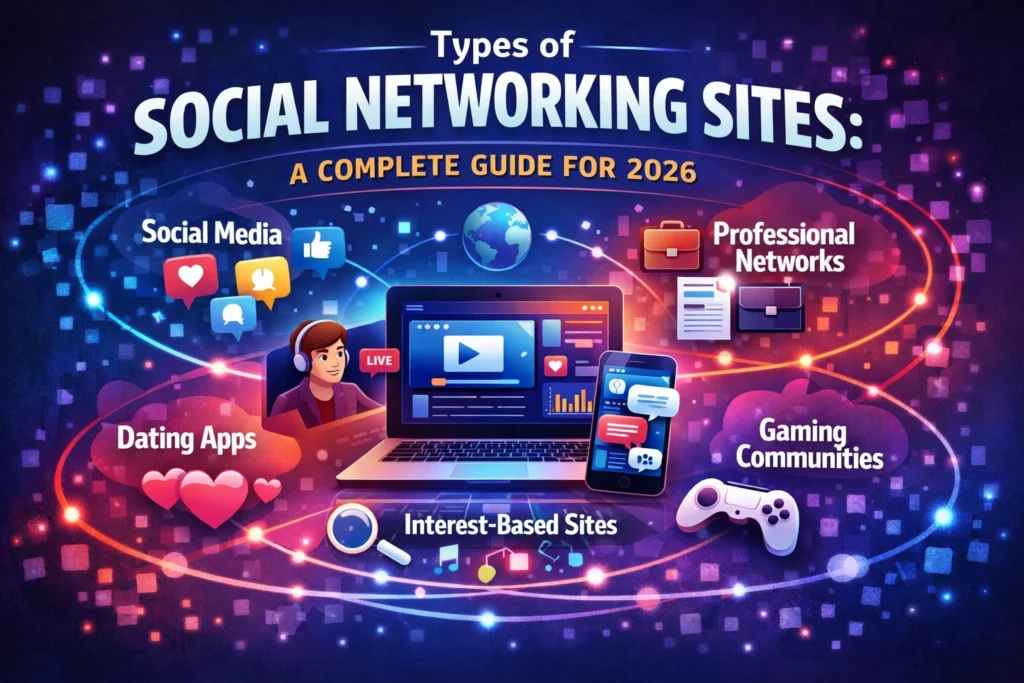
Social networking sites have completely changed how people communicate, share information, and build relationships online. What started as simple platforms to connect with friends has now evolved into a vast digital ecosystem where people learn, earn, collaborate, and even build full-scale businesses.
If you are trying to understand the types of social networking sites, you are not alone. This topic is highly searched because users, creators, and businesses all want to know where they should focus their time and energy.
In this detailed guide, you will learn about different types of social networking platforms, how they work, and why each type matters. This article is written in a natural, human style so you can actually enjoy reading it while learning something valuable.
What Are Social Networking Sites
Social networking sites are online platforms that allow people to connect, communicate, and share content with others. These platforms can be used for personal interactions, professional networking, entertainment, education, and business growth.
Some of the most popular examples include Facebook, Instagram, and LinkedIn.
However, not all social networking sites serve the same purpose. That is where understanding different types becomes important.
Why Understanding Different Types Matters
If you are a creator, marketer, or even a casual user, knowing the types of social networking sites helps you make smarter decisions.
You can choose the right platform based on your goal. For example, if you want to grow a personal brand, you might focus on visual platforms. If your goal is career growth, professional networks will be more useful.
Understanding the categories also helps in SEO, content strategy, and audience targeting.
1. Social Networking Sites for Personal Connections
This is the most common and widely used category. These platforms are designed to help people stay connected with friends, family, and acquaintances.
Platforms like Facebook and Snapchat allow users to share updates, photos, and personal moments.
These platforms focus on:
- Building personal relationships
- Sharing life updates
- Messaging and communication
People often use these platforms daily, which makes them powerful for engagement.
Even today, despite the rise of new apps, traditional social networking platforms still hold a strong user base.
2. Media Sharing Networks
Media sharing platforms focus mainly on visual content like photos and videos. These platforms are highly engaging because visual content grabs attention faster than text.
Popular examples include Instagram, YouTube, and TikTok.
These platforms are ideal for:
- Content creators
- Influencers
- Brands building visual identity
The rise of short-form content has made platforms like TikTok and Instagram Reels extremely powerful. People spend hours consuming quick, engaging videos.
If your goal is to build reach and visibility, this type of social networking site is essential.
3. Professional Networking Sites
Professional networking platforms are built for career growth, hiring, and business connections.
The best example is LinkedIn.
Unlike casual platforms, LinkedIn focuses on:
- Job opportunities
- Business networking
- Industry discussions
- Personal branding
Professionals use these platforms to showcase their skills, share knowledge, and connect with recruiters.
For someone like you with a background in digital marketing and interest in career growth, this category can be extremely valuable.
4. Blogging and Publishing Platforms
Some social networking sites are built around content publishing rather than direct interaction.
Platforms like Medium and WordPress allow users to write and share long-form content.
These platforms focus on:
- Thought leadership
- Educational content
- SEO-driven articles
Blogging platforms are especially useful for people who want to build authority in a niche.
Since you already run micro-niche blogs, this type of social networking platform plays directly into your strengths.
5. Discussion Forums and Community Platforms
These platforms are built around conversations, questions, and community-driven discussions.
Popular examples include Reddit and Quora.
Unlike traditional social media, these platforms focus on:
- Real user experiences
- Problem solving
- Deep discussions
Reddit communities, known as subreddits, are especially powerful for discovering trends and real user opinions.
If you are doing keyword research or looking for content ideas, these platforms are gold.
6. Microblogging Platforms
Microblogging platforms allow users to share short, quick updates instead of long posts.
The most well-known example is X.
These platforms focus on:
- Real-time updates
- News and trends
- Quick interactions
People use microblogging sites to stay updated with current events, opinions, and viral trends.
This type of platform is perfect if you want to stay relevant and participate in trending conversations.
7. Social Bookmarking Sites
Social bookmarking platforms allow users to save, organize, and share content.
Examples include Pinterest.
These platforms are often overlooked but are powerful for driving traffic.
They focus on:
- Content discovery
- Inspiration
- Idea saving
Pinterest, for example, acts like a search engine where users look for ideas related to fitness, fashion, home decor, and more.
For bloggers and marketers, this can be a strong traffic source.
8. Review and Rating Networks
Review platforms help users share opinions about products, services, and businesses.
Examples include Google Maps and Yelp.
These platforms are important because:
- They influence buying decisions
- They build trust
- They impact local SEO
If you are managing Google Business Profiles, this category becomes extremely important.
9. Interest-Based and Niche Communities
Some social networking sites focus on specific interests or industries.
For example:
- Fitness communities
- Gaming platforms
- Developer forums
A popular example is Discord.
These platforms allow users to connect over shared interests rather than personal relationships.
Niche communities often have higher engagement because users share common goals and interests.
10. Messaging and Communication Platforms
While not always considered traditional social networks, messaging apps play a huge role in social interaction.
Examples include WhatsApp and Telegram.
These platforms focus on:
- Direct communication
- Group chats
- Community building
Many businesses now use messaging apps for customer engagement and support.
How These Types Are Blending Together
One interesting trend is that the lines between different types of social networking sites are becoming blurred.
For example:
- Instagram now includes messaging, reels, and shopping
- LinkedIn includes content publishing and creator tools
- YouTube is becoming a social platform with community posts
This means that platforms are evolving into multi-purpose ecosystems rather than staying in one category.
Choosing the Right Social Networking Platform
Instead of trying to be active everywhere, it is better to choose platforms based on your goals.
If your goal is content creation, focus on visual platforms.
If your goal is career growth, use professional networks.
If your goal is traffic, explore blogging and bookmarking platforms.
The key is to understand where your audience spends time.
SEO Perspective on Social Networking Sites
From an SEO point of view, social networking sites play a huge role in visibility and traffic.
Search engines consider social signals indirectly. More importantly, social platforms help distribute content.
For example:
- Sharing blog posts on Facebook increases reach
- Pinterest drives long-term traffic
- Reddit can bring viral attention
If used correctly, social networking platforms can amplify your SEO efforts.
The Future of Social Networking Sites
The future of social networking is shifting towards personalization and community-driven experiences.
We are seeing trends like:
- AI-powered content recommendations
- Private communities over public feeds
- Creator-focused platforms
People are moving from broad networks to more focused and meaningful interactions.
This means niche communities and value-driven content will become more important.
Final Thoughts
Understanding the types of social networking sites is more than just basic knowledge. It helps you navigate the digital world more effectively.
Each platform serves a different purpose, and the best results come when you align your strategy with the right type.
Instead of trying to be everywhere, focus on where your audience is and where your strengths lie.
Social networking is no longer just about staying connected. It is about building identity, sharing value, and creating opportunities.