
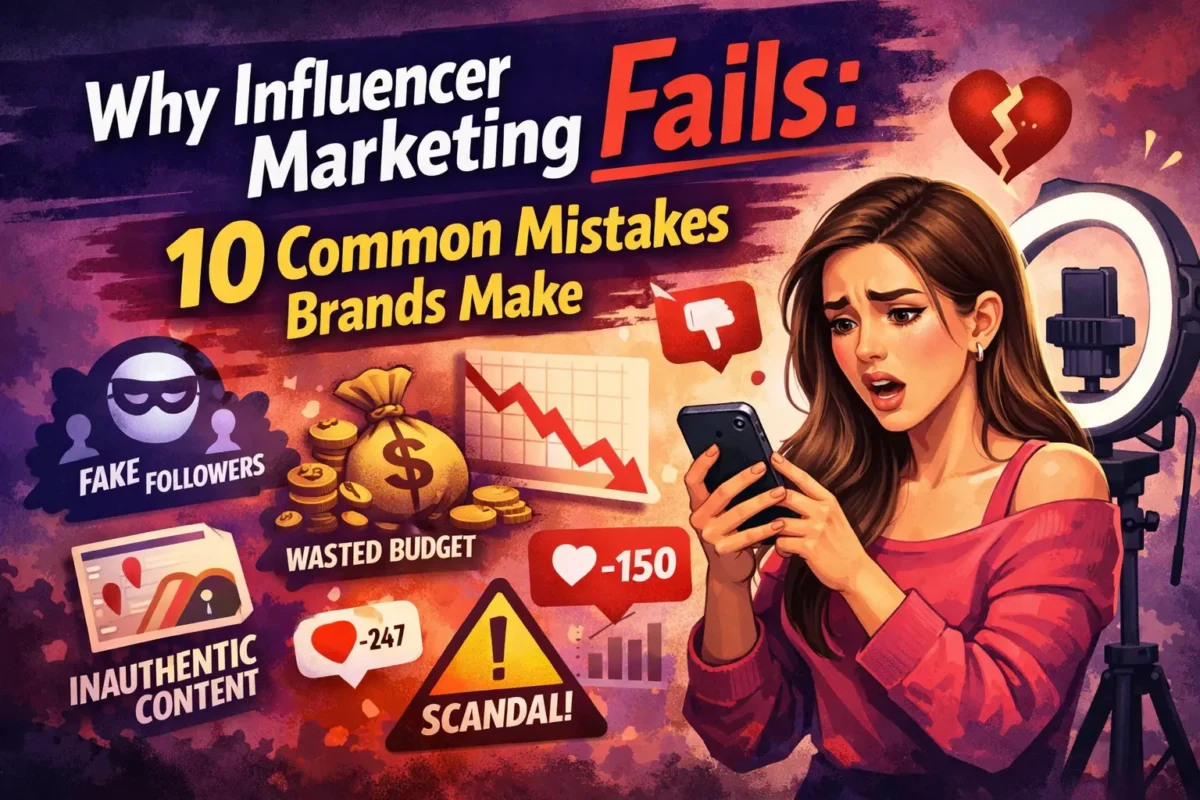
Influencer marketing has become one of the most talked-about strategies in digital marketing. Brands invest millions every year partnering with creators across platforms like Instagram, TikTok, and YouTube. When done correctly, influencer collaborations can generate massive awareness, strong engagement, and even direct sales.
However, despite its popularity, influencer marketing does not always produce the results brands expect. Many companies invest in influencer campaigns only to see minimal engagement or disappointing returns.
The reality is that influencer marketing can fail when brands misunderstand how it works or execute campaigns poorly. Simply paying someone with followers to promote a product does not guarantee success.
Understanding the reasons behind failed campaigns can help businesses avoid costly mistakes and build more effective strategies.
The Misconception That Follower Count Equals Influence
One of the most common reasons influencer marketing fails is the assumption that a large follower count automatically means strong influence.
Many brands choose influencers based purely on audience size. While reach can be important, it does not always translate into engagement or trust.
Some influencers have millions of followers but very low interaction rates. Others may have built their audience through giveaways, viral trends, or even purchased followers. In these cases, their followers may not be genuinely interested in the influencer’s content or recommendations.
On the other hand, smaller creators often have stronger relationships with their audience. These communities may be smaller, but they are usually more engaged and responsive.
Brands that focus only on follower numbers often overlook the importance of audience quality and relevance, which can lead to disappointing campaign results.
Choosing the Wrong Influencer for the Brand
Another major reason influencer marketing fails is poor influencer selection.
Influencers build their audiences around specific interests and lifestyles. When a brand partners with someone whose audience does not align with the product, the promotion can feel forced or irrelevant.
For example, if a technology brand collaborates with a beauty influencer whose audience primarily cares about skincare and cosmetics, the promotion may not resonate with viewers.
Successful influencer campaigns require careful research. Brands need to understand the influencer’s audience demographics, content style, and reputation before forming partnerships.
When influencer collaborations feel authentic and aligned with the creator’s niche, audiences are much more likely to respond positively.
Lack of Clear Campaign Goals
Many influencer campaigns fail simply because brands do not define clear goals from the beginning.
Influencer marketing can serve different purposes. Some campaigns focus on brand awareness, while others aim to generate website traffic, increase social media followers, or drive product sales.
Without a clear objective, it becomes difficult to measure success. A campaign that performs well in terms of engagement might still appear unsuccessful if the brand expected immediate sales.
Clear goals help brands choose the right influencers, create the right content, and track meaningful performance metrics.
When expectations and objectives are unclear, even well-executed campaigns can feel like failures.
Overly Scripted Promotions
One of the reasons audiences follow influencers is authenticity. Followers expect influencers to share genuine opinions and experiences.
However, some brands try to control influencer content too strictly. They provide rigid scripts or promotional messages that do not match the influencer’s natural voice.
When this happens, the promotion often feels like a traditional advertisement rather than a personal recommendation.
Audiences can easily detect when content feels forced or overly commercial. This can reduce trust and lead to lower engagement.
Influencers understand their audience better than anyone else. Allowing creators some creative freedom often leads to more authentic and engaging content.
Ignoring Audience Trust
Trust is the foundation of influencer marketing. Followers listen to influencers because they believe their opinions are honest.
If an influencer promotes too many unrelated products or frequently endorses brands without genuine enthusiasm, their credibility can suffer.
When audiences start to question an influencer’s sincerity, their recommendations lose power.
Brands must evaluate whether an influencer maintains a strong and trustworthy relationship with their audience. Authenticity and transparency play a major role in determining campaign success.
Poor Campaign Tracking and Measurement
Another reason influencer marketing fails is the lack of proper performance tracking.
Some brands launch influencer campaigns without setting up clear metrics or analytics tools. As a result, they cannot accurately evaluate the campaign’s impact.
Successful campaigns often track metrics such as engagement rates, reach, click-through rates, and conversions.
Tracking these indicators helps brands understand which influencers perform well and which strategies produce the best results.
Without reliable data, brands may mistakenly assume influencer marketing is ineffective when the issue is actually poor measurement.
Fake Followers and Engagement
The rise of influencer marketing has also led to the growth of fake followers and artificial engagement.
Some influencers use bots or third-party services to inflate their follower counts, likes, and comments. At first glance, their profiles may appear highly influential.
However, fake followers do not interact with content in meaningful ways and cannot become customers.
Brands that fail to verify influencer authenticity risk investing in campaigns that reach inactive or fake audiences.
Tools and analytics platforms can help identify suspicious engagement patterns and ensure that influencers have genuine audiences.
Short-Term Thinking in Influencer Campaigns
Many brands approach influencer marketing as a one-time promotional activity rather than a long-term strategy.
While single posts can generate awareness, sustained partnerships often produce stronger results. Long-term collaborations allow influencers to integrate a brand more naturally into their content.
Over time, repeated exposure builds familiarity and trust among the influencer’s audience.
When brands focus only on short-term promotions, they may miss the deeper relationship-building benefits that influencer marketing can provide.
Poor Product-Market Fit
Sometimes influencer marketing fails not because of the influencer but because of the product itself.
If a product does not provide real value or solve a meaningful problem, even the most effective promotion may not generate lasting interest.
Influencers can introduce products to their audience, but they cannot guarantee satisfaction.
Brands must ensure that their products meet customer expectations. When the product delivers real value, influencer marketing becomes far more effective.
The Importance of Strategy in Influencer Marketing
The most successful influencer marketing campaigns are built on thoughtful strategy rather than quick decisions.
Brands that invest time in researching influencers, understanding their audience, and developing authentic collaborations tend to achieve better outcomes.
Influencer marketing works best when it is integrated into a broader digital marketing strategy that includes social media engagement, content marketing, and community building.
When brands treat influencer marketing as a relationship rather than a transaction, campaigns become more meaningful and impactful.
FAQs
Why does influencer marketing sometimes fail?
Influencer marketing can fail due to poor influencer selection, fake followers, unclear campaign goals, or lack of audience alignment. Without proper strategy, campaigns may not produce meaningful results.
Does a larger follower count guarantee better results?
No. Engagement and audience relevance are often more important than follower count. Smaller influencers with loyal audiences may deliver better results than larger creators with low engagement.
How can brands avoid influencer marketing failures?
Brands should research influencers carefully, set clear campaign goals, track performance metrics, and prioritize authenticity in collaborations.
Is influencer marketing still effective?
Yes. When executed correctly, influencer marketing remains one of the most effective digital marketing strategies because it leverages trust and personal recommendations.
What is the biggest mistake brands make in influencer marketing?
One of the biggest mistakes is choosing influencers based only on follower numbers without considering audience quality and niche relevance.
Final Thoughts
Influencer marketing has the potential to be incredibly powerful, but success depends on strategy, authenticity, and careful execution.
Brands that approach influencer collaborations thoughtfully—focusing on genuine relationships, audience relevance, and long-term partnerships—are far more likely to see positive results.
Instead of asking whether influencer marketing works, businesses should focus on how to make influencer marketing work effectively.
When done right, it can transform how brands connect with modern audiences.
Leave a Reply