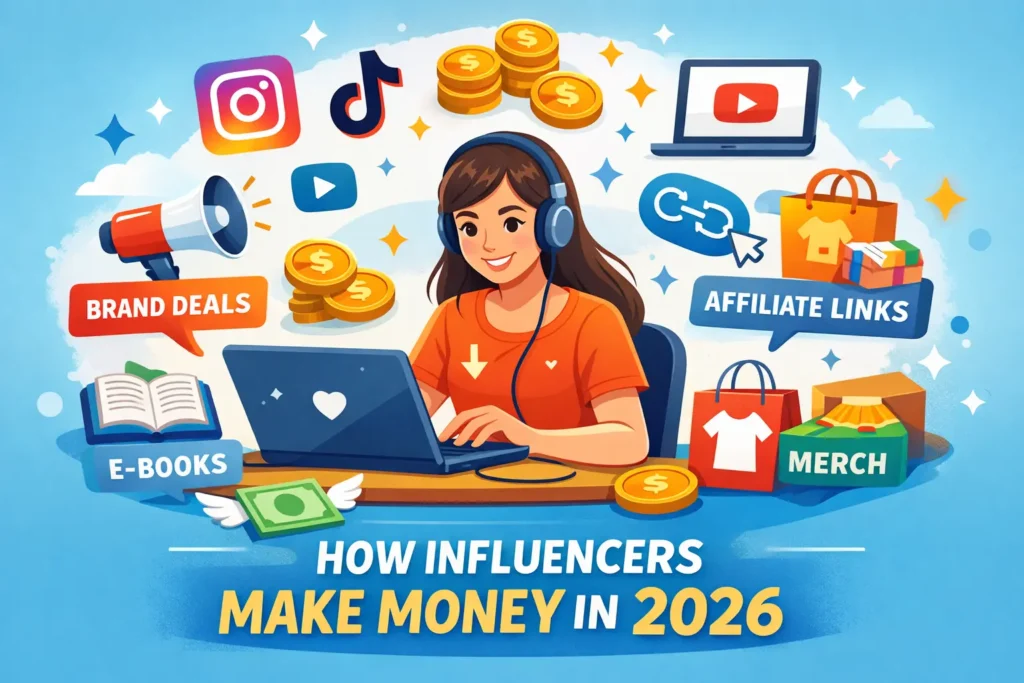
The influencer economy has evolved dramatically over the past decade. What started as people casually posting photos and videos online has transformed into a multi-billion dollar global industry. In 2026, influencers are no longer just social media personalities — they are entrepreneurs, brand partners, digital marketers, and content creators who generate revenue through multiple income streams.
Whether you follow fitness creators, tech reviewers, lifestyle vloggers, or finance educators, chances are you have seen influencers promoting products, collaborating with brands, or launching their own businesses.
But how exactly do influencers make money in 2026?
In this detailed guide, we will explore the different ways influencers earn money today, how much they can make, and how the monetization model has evolved with platforms like Instagram, YouTube, TikTok, and new creator economy tools.
The Influencer Economy in 2026
The creator economy is bigger than ever. According to industry estimates, the influencer marketing market is expected to exceed $35 billion globally by 2026.
Brands increasingly prefer influencers because they offer:
- Authentic audience engagement
- Targeted niche communities
- Higher conversion rates than traditional ads
- Personalized storytelling
Instead of spending large budgets on TV advertising, companies now collaborate with influencers who already have the trust of their audience.
This shift has made influencer marketing one of the most profitable digital careers today.
Main Ways Influencers Make Money in 2026
Influencers rarely depend on a single income source. Most successful creators build multiple revenue streams to create stable income.
Below are the most common ways influencers earn money today.
1. Sponsored Posts and Brand Collaborations
The most popular way influencers earn money is through brand sponsorships.
Brands pay influencers to promote their products through:
- Instagram posts
- Reels or TikTok videos
- YouTube integrations
- Story promotions
- Dedicated product reviews
Instead of traditional advertising, brands rely on influencers to create natural promotional content that feels authentic.
For example, a fitness influencer might promote:
- Protein supplements
- Fitness equipment
- Workout apps
- Healthy meal services
Similarly, a tech influencer might review smartphones, gadgets, or software tools.
How Influencers Get Brand Deals
Influencers secure brand partnerships through several methods:
- Direct outreach to brands
- Influencer marketing platforms
- Talent agencies
- Brand PR teams
- LinkedIn networking
Many companies now allocate 30–40% of their marketing budget specifically for influencer collaborations.
Average Sponsorship Earnings (2026)
| Influencer Type | Followers | Avg Payment Per Post |
|---|---|---|
| Nano Influencer | 1k – 10k | $50 – $500 |
| Micro Influencer | 10k – 100k | $500 – $5,000 |
| Mid Tier | 100k – 500k | $5,000 – $20,000 |
| Macro Influencer | 500k – 1M | $20,000 – $50,000 |
| Mega Influencer | 1M+ | $50,000 – $500,000 |
However, engagement rate often matters more than follower count.
2. Affiliate Marketing
Affiliate marketing is one of the most scalable income streams for influencers.
Instead of charging brands upfront, influencers promote products using a unique referral link. They earn a commission whenever someone purchases through that link.
How Affiliate Marketing Works
- Influencer joins an affiliate program
- Receives a unique tracking link
- Promotes the product to followers
- Earns commission on every sale
This method works especially well for:
- Tech influencers
- Bloggers
- Finance creators
- Fitness influencers
- Beauty creators
Popular affiliate platforms include:
- Amazon Associates
- ShareASale
- Impact
- ClickBank
- PartnerStack
Why Influencers Prefer Affiliate Marketing
Affiliate marketing offers several advantages:
- Passive income potential
- Unlimited earning potential
- No need for brand negotiations
- Works across multiple platforms
A creator with strong audience trust can earn thousands of dollars monthly through affiliate sales alone.
3. YouTube Ad Revenue
YouTube remains one of the most profitable platforms for creators.
Influencers earn money from ads shown on their videos through the YouTube Partner Program.
Types of YouTube Ads
YouTube displays different types of advertisements:
- Skippable ads
- Non-skippable ads
- Display ads
- Sponsored cards
- Mid-roll ads
Creators earn a share of the advertising revenue.
Average YouTube Earnings
YouTube pays based on CPM (Cost Per Thousand Views).
Typical earnings:
| Content Category | Average CPM |
|---|---|
| Gaming | $2 – $5 |
| Entertainment | $3 – $6 |
| Lifestyle | $5 – $10 |
| Finance | $12 – $25 |
| Tech | $8 – $18 |
For example:
A video with 1 million views can generate anywhere between $3,000 to $20,000 depending on niche and audience location.
This is why many influencers prioritize long-form YouTube content for stable income.
4. Selling Digital Products
In 2026, many influencers generate significant revenue by selling their own digital products.
Instead of promoting other brands, they create products for their audience.
Common digital products include:
- Online courses
- Ebooks
- Presets and templates
- Fitness workout plans
- Social media guides
- Trading or finance courses
For example:
A social media influencer might sell:
- Instagram growth course
- Content creation templates
- Brand deal negotiation guide
Since digital products have no manufacturing cost, profit margins can exceed 90%.
Many creators generate six-figure income annually from digital products alone.
5. Subscription Communities
Another growing trend in the creator economy is paid communities.
Influencers offer exclusive content to followers who pay a monthly subscription.
Popular platforms include:
- Patreon
- Discord memberships
- Substack
- OnlyFans (for specific niches)
- YouTube Memberships
Subscribers receive perks such as:
- Exclusive videos
- Private communities
- Live Q&A sessions
- Behind-the-scenes content
- Personalized advice
Even if only 1–3% of followers subscribe, creators can generate consistent monthly revenue.
For example:
An influencer with 100,000 followers and 1,000 paying members at $10/month earns $10,000 monthly recurring income.
6. Selling Physical Products or Merchandise
Many influencers also launch their own brands or merchandise lines.
Common merchandise includes:
- Clothing
- Fitness gear
- Accessories
- Books
- Supplements
- Digital creator tools
This approach works well because influencers already have a loyal audience ready to buy from them.
For example:
Fitness influencers often launch:
- Protein supplements
- Resistance bands
- Workout programs
- Athletic clothing
Similarly, tech influencers might launch:
- Laptop accessories
- Productivity tools
- Creator gear
Merchandise allows influencers to transform their personal brand into a full business.
7. Platform Creator Funds
Many social media platforms now pay creators directly through creator funds.
These funds reward influencers based on content performance.
Examples include:
- TikTok Creator Fund
- Instagram Creator Bonus
- Snapchat Spotlight Rewards
- Facebook Creator Program
However, these payments are usually smaller compared to sponsorships.
Most influencers treat creator funds as bonus income rather than primary revenue.
8. Live Streaming and Fan Donations
Live streaming has become extremely popular in recent years.
Influencers earn money through:
- Live gifts
- Donations
- Super chats
- Virtual gifts
Platforms that support creator donations include:
- YouTube Live
- TikTok Live
- Twitch
- Instagram Live
During live sessions, viewers send virtual gifts that convert into real money.
Top streamers can earn thousands of dollars in a single live session.
How Much Do Influencers Make in 2026?
Influencer income varies widely depending on niche, audience size, and monetization strategy.
Here is a rough estimate of influencer earnings.
| Influencer Level | Monthly Income |
|---|---|
| Nano Influencer | $200 – $2,000 |
| Micro Influencer | $2,000 – $10,000 |
| Mid Tier | $10,000 – $50,000 |
| Macro Influencer | $50,000 – $200,000 |
| Mega Influencer | $200,000+ |
Many top influencers earn millions annually by combining multiple income streams.
The Most Profitable Influencer Niches in 2026
Not all niches generate equal revenue.
Some industries attract higher advertising budgets and higher CPM rates.
The most profitable influencer niches include:
Finance and Investing
Finance creators earn some of the highest ad rates due to the value of financial audiences.
Content examples include:
- Investing tutorials
- Stock market analysis
- Personal finance tips
Technology
Tech influencers review gadgets, smartphones, laptops, and software tools.
Tech brands spend heavily on influencer marketing.
Fitness and Health
Fitness creators promote:
- Workout plans
- Supplements
- Gym equipment
- Wellness apps
This niche offers strong affiliate opportunities.
Business and Entrepreneurship
Business influencers share:
- Startup advice
- Marketing strategies
- Productivity tips
They often monetize through courses and consulting.
How Influencers Build Profitable Personal Brands
The most successful influencers treat their platform like a business, not a hobby.
Key strategies include:
Creating Niche Authority
Instead of posting random content, influencers focus on specific niches such as:
- Fitness
- Tech
- Personal finance
- Travel
- Productivity
Niche authority builds audience trust.
Consistent Content Creation
Successful influencers publish content regularly across multiple platforms.
This improves visibility and audience engagement.
Building Community
Influencers interact with their audience through comments, live sessions, and direct messages.
This relationship increases conversion rates for promotions.
Diversifying Income Streams
Relying on one platform is risky.
Smart creators monetize through multiple channels including:
- sponsorships
- digital products
- affiliate marketing
- communities
The Future of Influencer Income
The influencer economy will continue evolving rapidly.
Key trends expected in the future include:
AI Assisted Content Creation
Creators are already using AI tools for:
- video editing
- script writing
- thumbnail generation
- marketing automation
Creator Owned Platforms
Influencers are moving audiences to platforms they control such as:
- email newsletters
- private communities
- websites
This reduces dependence on social media algorithms.
Micro Influencer Growth
Brands are increasingly working with micro influencers instead of celebrities because they deliver better engagement.
Conclusion
Influencers in 2026 have more opportunities than ever to generate income online. What began as simple social media posting has evolved into a professional digital career with multiple revenue streams.
Successful influencers earn money through brand partnerships, affiliate marketing, digital products, ad revenue, subscriptions, and merchandise sales.
The key to long-term success is not just gaining followers but building trust, authority, and a strong personal brand.
As the creator economy continues to expand, influencer marketing will remain one of the most powerful forms of digital marketing — benefiting both brands and creators.
FAQs
How many followers do you need to start making money as an influencer?
You can start earning even with a few thousand followers. Many brands work with nano influencers because they have highly engaged audiences. What matters most is engagement rate and niche authority rather than follower count.
Which platform pays influencers the most?
YouTube generally offers the highest long-term earnings due to ad revenue, sponsorships, and affiliate marketing opportunities. However, Instagram and TikTok often generate more brand deals because of their strong engagement rates.
Do influencers pay taxes on their income?
Yes, influencer earnings are considered business income in most countries. Influencers must report income from sponsorships, affiliate marketing, ad revenue, and product sales according to their local tax regulations.
Is it difficult to become a successful influencer?
Becoming a successful influencer requires consistent content creation, niche expertise, audience engagement, and strong branding. While the barrier to entry is low, building a profitable audience takes time and strategic effort.